
How to Tell If Your Retaining Wall Is Failing
Noticing a wall that is leaning, cracking, or bulging can be unsettling. This guide explains what visible signs may mean, what to watch over time, and when it makes sense to ask a contractor to take a closer look. You can request a free estimate whenever you are ready.
Common Signs a Retaining Wall May Need Attention
Most walls show some weathering as they age. The signs that matter are changes: movement, new cracks, or soil loss that appears and gets worse. Use the diagram and the descriptions together to understand what you may be seeing.
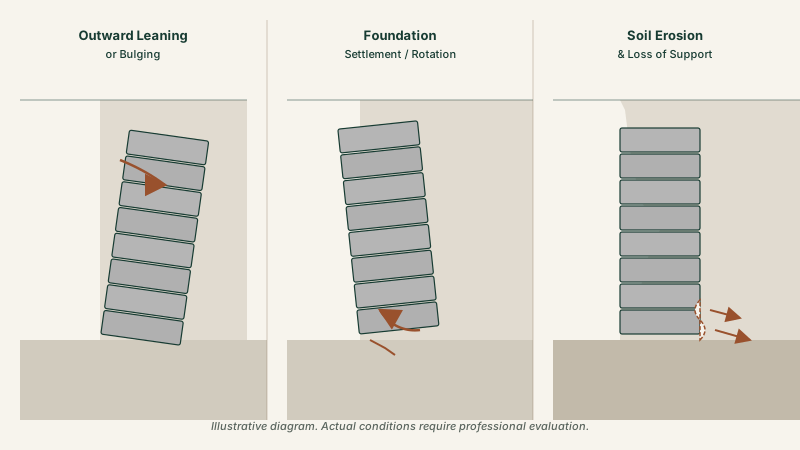
Illustrative diagram. Actual conditions require professional evaluation.
Leaning or Tilting
The wall no longer stands straight up and down. The top has shifted outward, away from the soil it holds back. Some lean develops slowly over years; some appears after heavy rain or a change in the yard above.
Bulging or Bowing
A section of the wall's face pushes outward, often in one spot rather than along the whole length. A bulge can mean pressure is building behind that part of the wall faster than the rest can resist it.
Cracking
New or widening cracks deserve attention, especially horizontal cracks or stepped cracks that follow the joints between blocks. Small surface cracks from aging are common; cracks that grow or run through the wall can signal movement underneath.
Separation or Soil Loss
Blocks pulling apart, gaps opening at joints, or soil washing out from behind or beneath the wall all reduce support. Soil loss behind a wall often means water is carrying material away, which weakens the base the wall rests on.
Some of these signs can have several underlying causes. The right next step depends on what is actually happening with your wall, not only what the surface looks like.
Why Retaining Walls Move
Understanding the likely cause helps explain why a simple surface repair may not solve the problem. The signs above often point back to a few common forces.
Water Pressure and Drainage
Water that builds up behind a wall adds outward pressure. If the wall's drainage is not doing its job, that pressure grows. Poor drainage is one of the most common reasons walls lean or bulge. For more, see the drainage and erosion FAQ.
Base and Foundation Support
A wall built on soft, saturated, or poorly prepared ground can settle or rotate over time. When the base moves, the whole wall moves with it.
Erosion and Soil Loss
Soil washing out from behind or beneath the wall removes the support the wall depends on. As material disappears, the wall can lean, settle, or gap.
Loads Above the Wall
A driveway, parking area, patio, or added fill placed above a wall adds extra pressure called surcharge. Not every wall is built to hold that added load. See the design and planning FAQ for more on how loads affect a wall.
A wall rarely fails for only one reason. The visible sign is often the result, not the cause. That is why rebuilding the same wall without addressing the underlying condition can lead to the same problem again.
How to Gauge How Urgent It Might Be
No online guide can tell you whether your wall is safe. But you can think about a few factors that affect how quickly to act.
Is the Movement New or Getting Worse?
Movement that continues or speeds up, especially after heavy rain, deserves prompt attention. A wall that shifted years ago and has not moved since is different from one that is changing now.
How Close Is It to People or Structures?
A wall next to a driveway, sidewalk, home, play area, or parking space is higher priority than one in an open, low-traffic area.
How Tall Is It?
Taller walls hold more soil and create more force. A tall wall that is leaning generally warrants more urgent attention than a short one showing the same signs.
Is Water Involved?
Saturated soil, poor drainage, or water flowing toward the wall increases pressure. If you see water where it should not be, the cause may be making the movement worse.
When to Treat It as Urgent
If a wall is moving quickly, has shifted noticeably in the last few days or weeks, is leaning sharply, or you see signs it may give way, keep people, children, and pets away from the area and keep vehicles and foot traffic clear. Arrange for a qualified professional to evaluate it before anyone walks, plays, or works near it. If there is an immediate danger to people or property, contact your local emergency services.
This guide can help you decide when to seek a professional evaluation. It is not a structural inspection, and no photograph or online description can confirm whether a wall is safe.
What to Do While You Decide
A few simple steps can help you keep track of what is happening and stay safe while you arrange an evaluation.
Do
- Observe the wall from a safe distance.
- Take dated photos so you can compare changes over time.
- Note when changes appear and whether they follow rain.
- Keep children and pets away if the wall looks unstable.
- Redirect surface water away from the wall if you can do so safely without excavating.
Don't
- Climb on the wall or let others do so.
- Excavate behind or beneath the wall.
- Try to push or pull the wall back into place.
- Seal drainage openings without understanding their purpose.
- Add weight above the wall, such as parked vehicles or heavy fill.
For more on what to check after storms and how to keep an aging wall in good shape, see the retaining wall maintenance and repair FAQ.
Concerned About Your Retaining Wall?
Tell us what you are seeing on your property. We can help you connect with a contractor who can evaluate the wall and explain your options for repair or replacement.
678-335-6999 · Free, no obligation