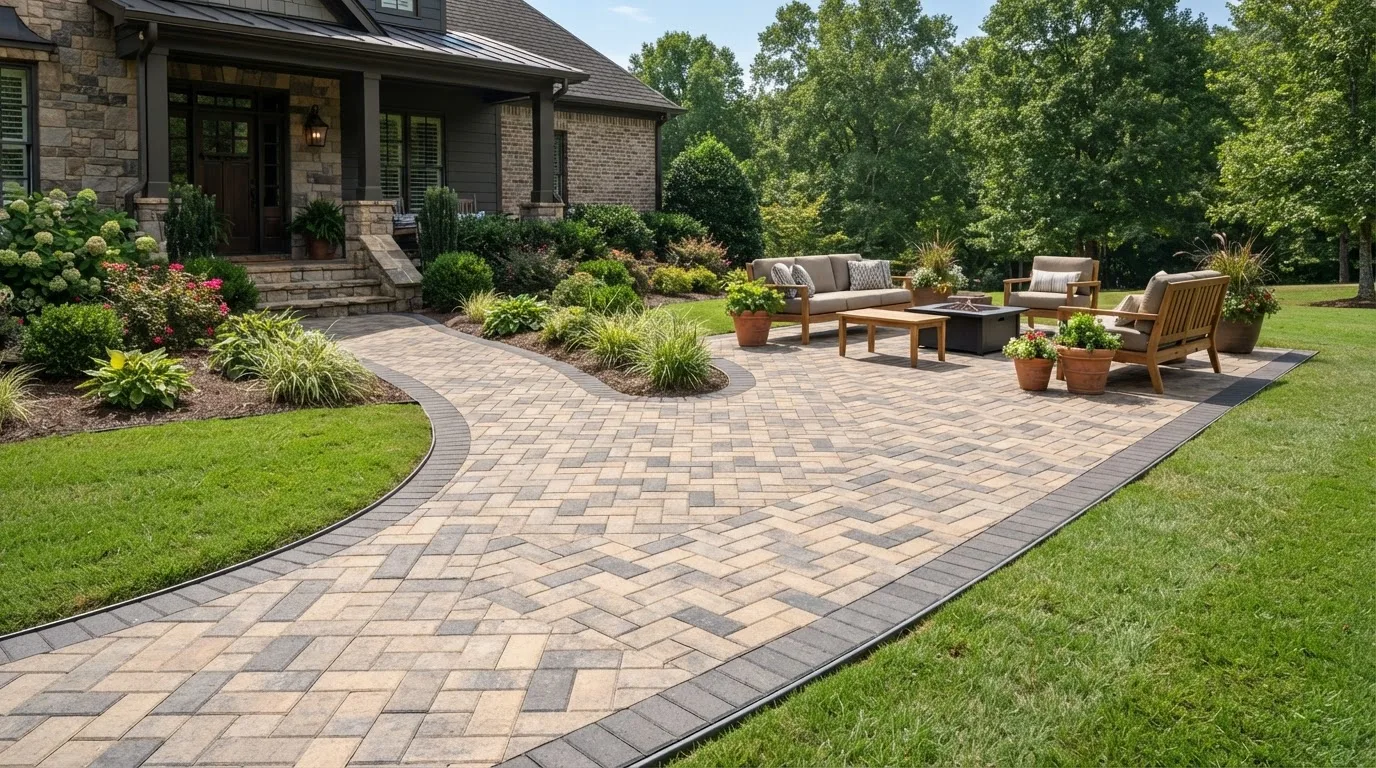
Find Inspiration for the Space You Call Home.
This is a place to imagine a more beautiful, useful outdoor space and learn what it could take to create one. Picture a patio for evenings with friends, or a walkway that makes coming home feel special. Explore possibilities, discover practical options, and ask for guidance whenever you're ready. Your ideas, your property, and your budget shape what happens next.
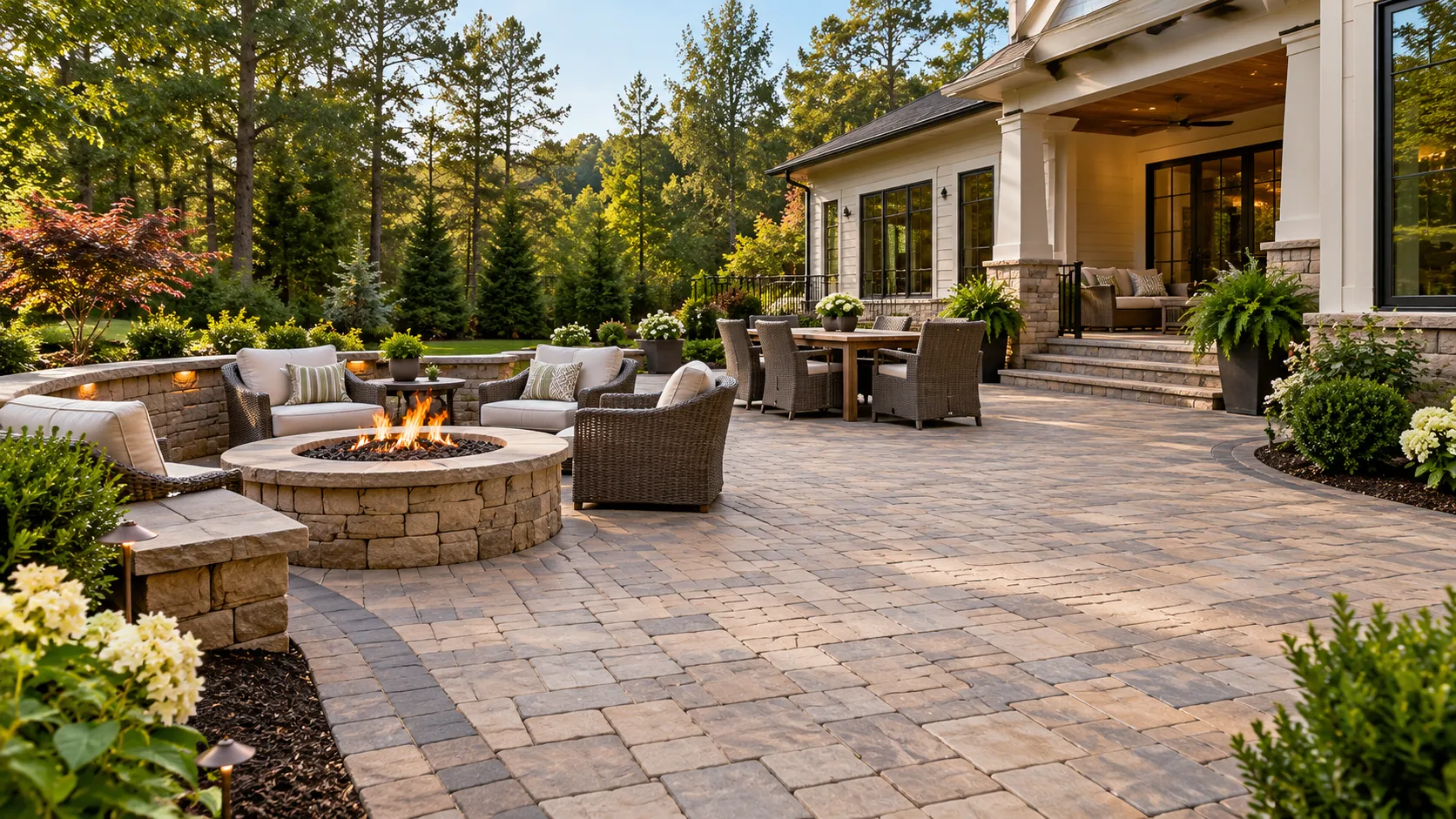
Paver Patios
Picture a place for a quiet morning coffee, family dinners, or evenings around a fire pit. A patio can be designed around seating, circulation, and the connection to your home. Consider how much room the furniture needs, where people will walk, and whether shade, lighting, or steps should be part of the plan.
Explore patio planning ↗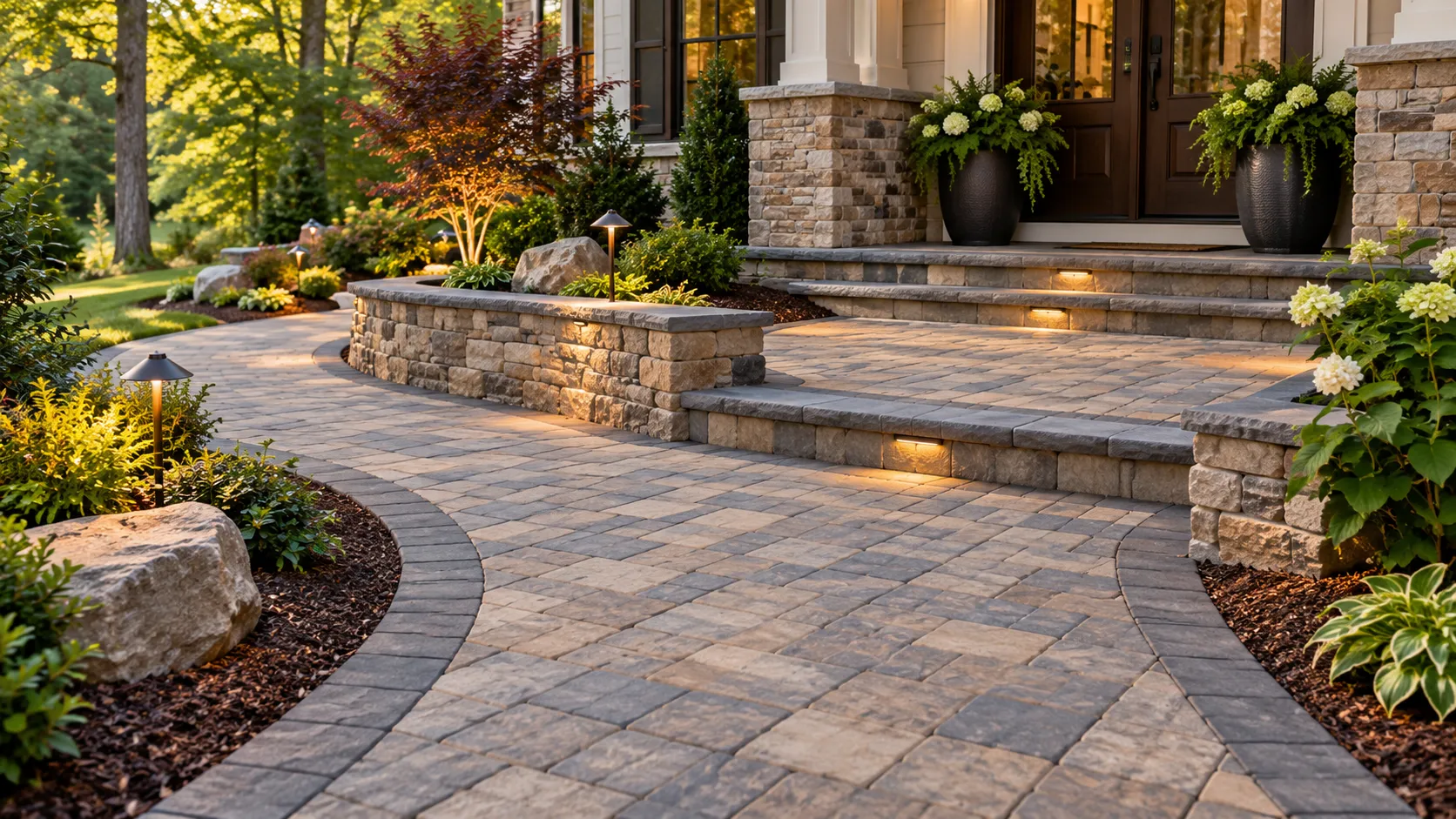
Walkways & Landings
A thoughtfully placed walkway does more than lead from one point to another. It can connect the driveway, entrance, garden, patio, and yard while making changes in grade easier to navigate. Width, drainage, step placement, and the transition to existing surfaces all deserve attention.
Explore walkway planning ↗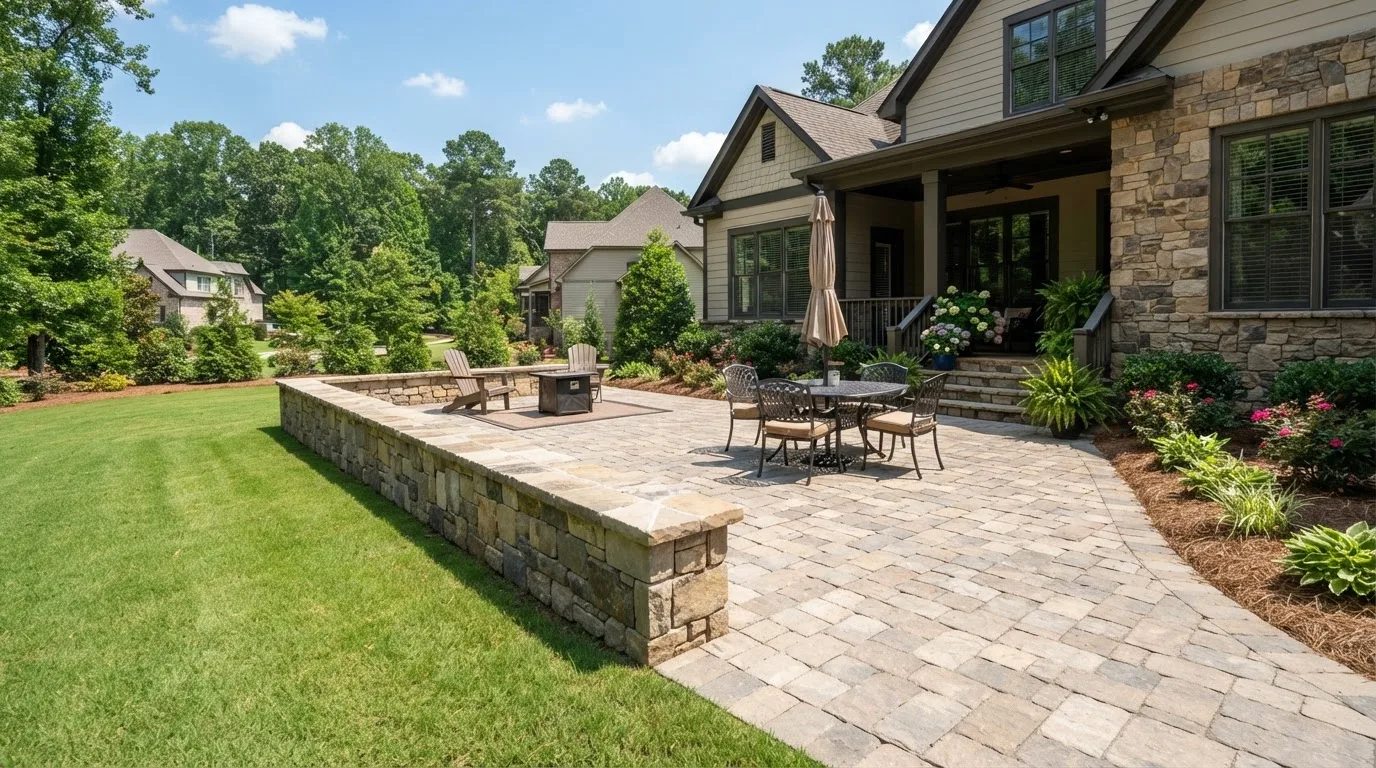
More Ways Pavers Can Work for Your Home
Not every project is a large patio. Pavers can make smaller, everyday transitions more beautiful and useful, especially where a yard has a change in elevation or a connection between outdoor spaces.
Landings and entrances
A well-planned landing can create a comfortable transition at a doorway, stair, or entrance. The finished height, slip resistance, drainage, and surrounding surfaces all deserve attention.
Pavers with retaining walls
On sloped North Georgia properties, paver areas may meet steps, terraces, or retaining walls. Considering the paving and grade changes together can create more usable space and a cohesive appearance.
Good Pavers Start Below the Surface.
An attractive paver surface should fit the way you use your property. In the Cartersville area, slopes, clay-rich soils, and concentrated rainfall can make preparation just as important as the paver pattern.
Start with the property
Decide where the patio or walkway belongs, how much space you need, and where people will enter and exit. Check how the proposed elevation relates to door thresholds, yards, and nearby structures.
Plan the base and drainage
Ask how excavation, compacted base material, edge restraints, and runoff will be handled. The appropriate base depends on soil, slope, intended loads, and the chosen paving system.
Make the transitions work
Think about how the finished pavers meet grass, beds, driveways, stairs, and retaining walls. Smooth transitions and a clear water path are as important as an attractive border.
How a Paver Area Takes Shape
Installation methods vary with the chosen paver system and property, but a few core stages help explain what a contractor's proposal may include.
Evaluate and lay out the space
Review dimensions, access, surface heights, drainage, and how the new paving will connect with the home and yard.
Prepare a stable base
Excavate and prepare an appropriate compacted base for the soil, expected use, elevations, and specified paving system.
Set, finish, and inspect
Install the pavers, borders, edge restraints, and specified jointing materials. Check transitions, water flow, and the finished appearance.
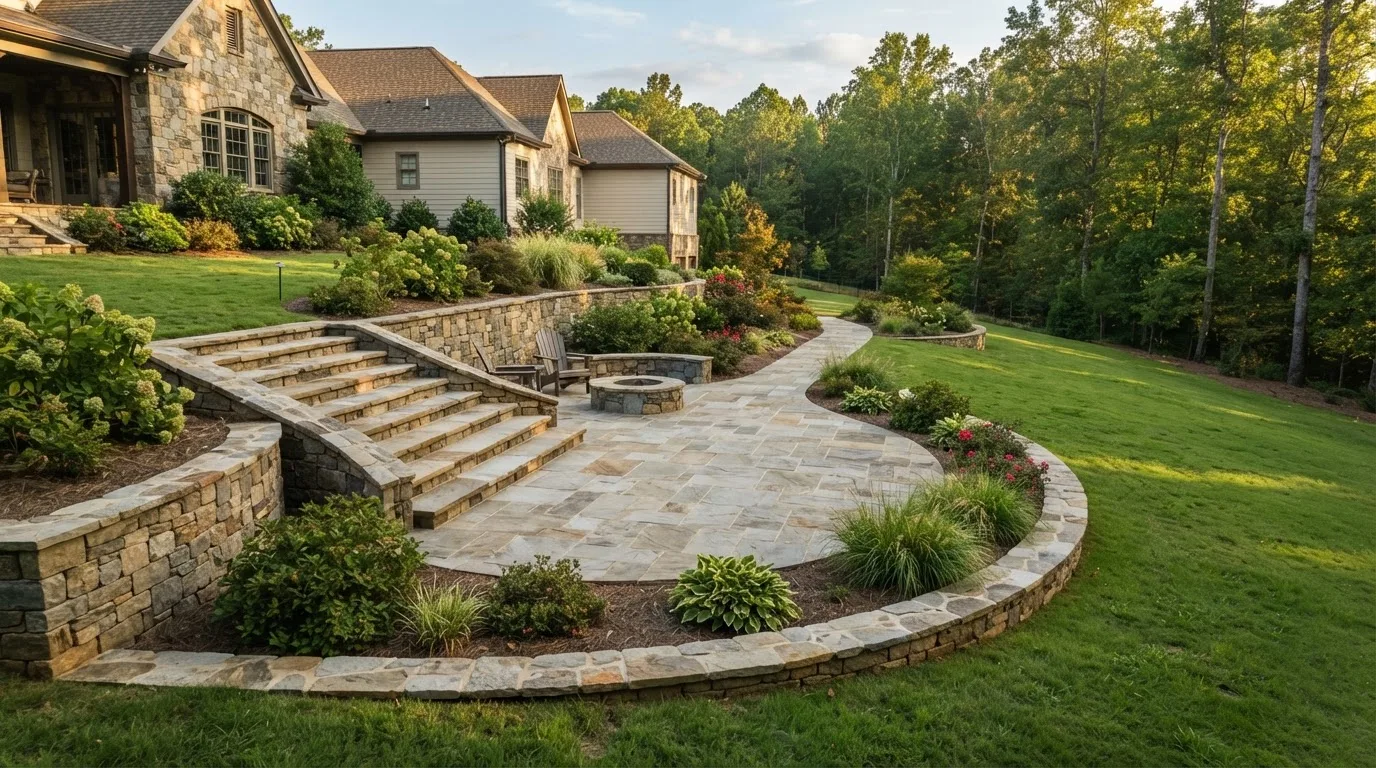
From Challenging Grade to a Natural Flow
An uneven yard doesn't necessarily rule out pavers. A patio might need a different location, a change in elevation, or steps connecting two areas.
On some properties, grading or a retaining wall becomes part of the plan. The goal is a layout that looks natural, works with the slope, and connects comfortably to the rest of the yard.
Discuss your project ↗The Right Pavers for the Way You Live
Before choosing a color from a sample board, consider how the space will actually be used. These decisions make the finished result more practical and help narrow the estimate.
Room for real life
For patios, plan enough clear space for chairs to pull back, people to move around furniture, and guests to circulate. For walkways, think about daily foot traffic, bins, and access between outdoor areas.
A look that belongs
Color, texture, scale, and laying pattern should complement the home's exterior. A subtle border can define the space without making it look busy; larger-format units can create a quieter visual effect.
Materials that suit the job
Ask whether the proposed paver is suitable for a pedestrian patio, walkway, or heavier use. Slip resistance, joint spacing, edge restraint, and maintenance requirements matter alongside appearance.
Explore these design examples to picture the styles, spaces, and details you might enjoy at home.
What Does a Paver Patio Cost?
Every property is different, and so is every homeowner's vision. The size of your space, your paver choices, site preparation, drainage, and the features you want all affect cost. These researched planning ranges offer a useful starting point for exploring your options.
| Project | Typical Planning Range | Example Scope |
|---|---|---|
| Small paver patio | $1,600–$5,000 | Approximately 200 sq. ft. |
| Medium paver patio | $2,400–$7,500 | Approximately 300 sq. ft. |
| Large paver patio | $3,200–$10,000 | Approximately 400 sq. ft. |
Why two patios of the same size can cost different amounts
A level, accessible area with straightforward excavation may require less preparation than a sloped site with difficult access, drainage concerns, or several steps. Material selection, borders, patterns, and demolition of an existing surface also affect labor and materials.
Ask what the estimate includes
Compare the scope, not just the total price. Ask about excavation, debris removal, base preparation, compaction, edge restraint, pavers, joint material, drainage provisions, and cleanup. A low number is not useful if important work is excluded.
Cost reference: Angi paver patio cost guide.
Published installation-cost benchmarks provide a starting point. Your final estimate reflects your property, design choices, and project scope.
See Real Paver Options and Material Price Examples
Looking at a few real product examples can make pricing easier to understand. The examples below reflect retail material pricing from a major home-improvement retailer and are meant to help you compare styles and budget levels. They do not include excavation, base preparation, drainage, labor, edge restraints, or installation.
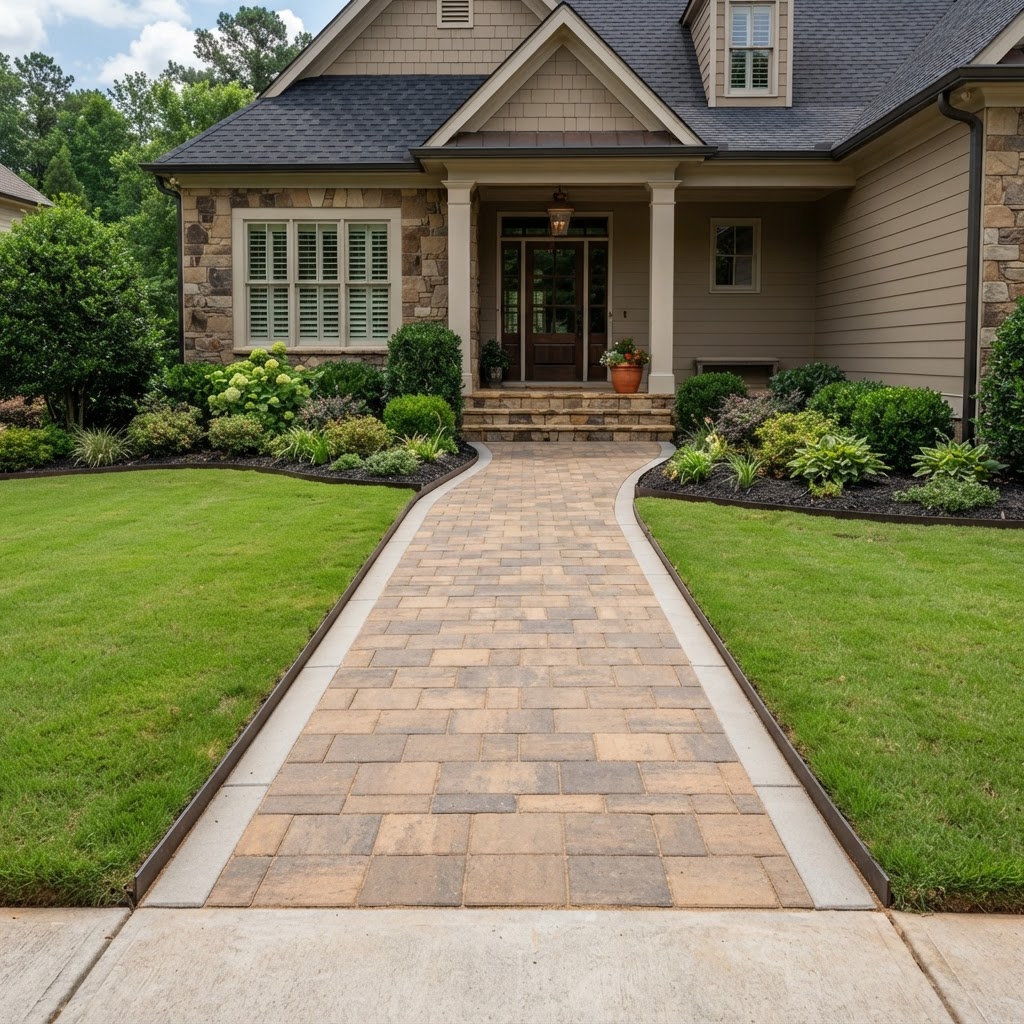
Basic Concrete Paver
Inspired by: Pavestone Holland 7.75 in. x 4 in. x 1.75 in. Old Town Blend Concrete Paver
Approx. retail price: $0.78 each
A simple rectangular concrete paver often used for patios, walkways, and traditional laying patterns.
View product details ↗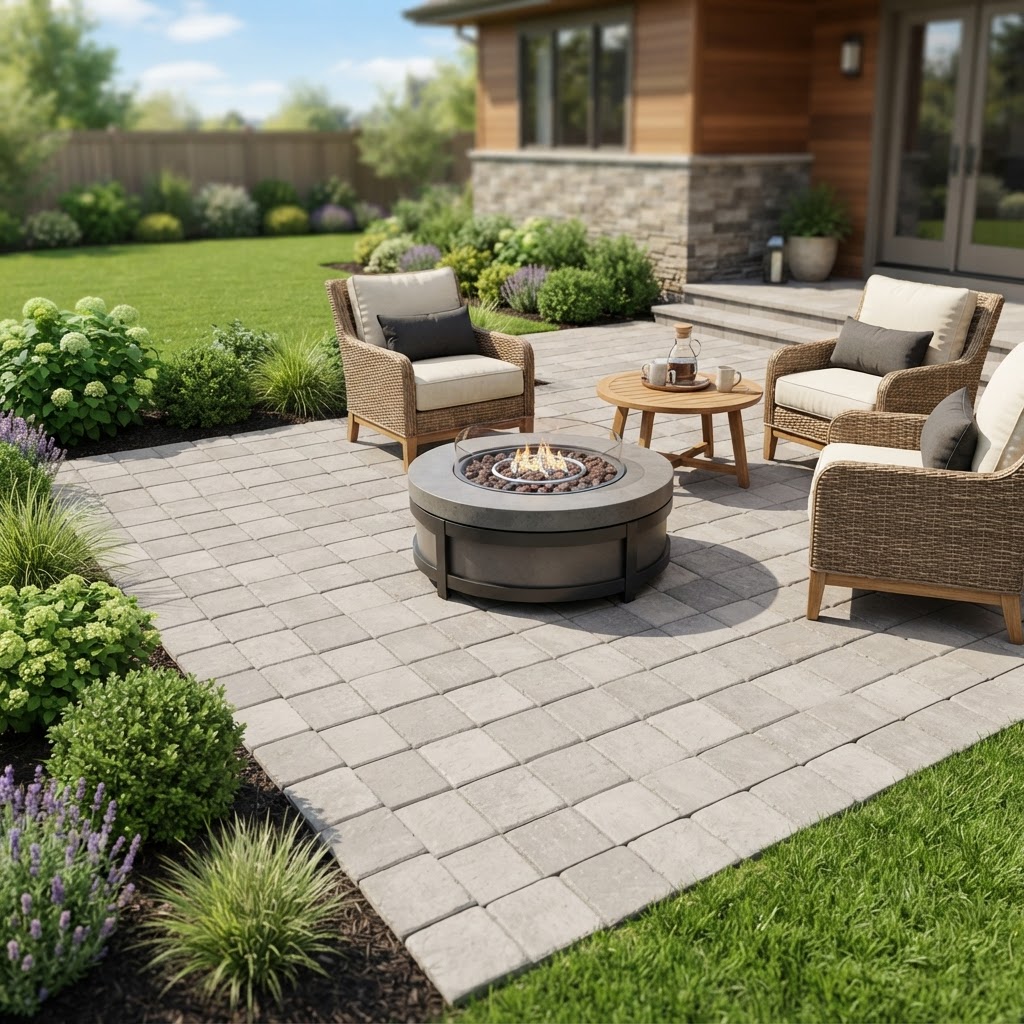
Tumbled / Decorative Concrete Paver
Inspired by: Pavestone RumbleStone Square 7 in. x 7 in. x 1.75 in. Greystone Concrete Paver
Approx. retail price: $2.98 each
A more textured, decorative paver style with a softer, aged appearance.
View product details ↗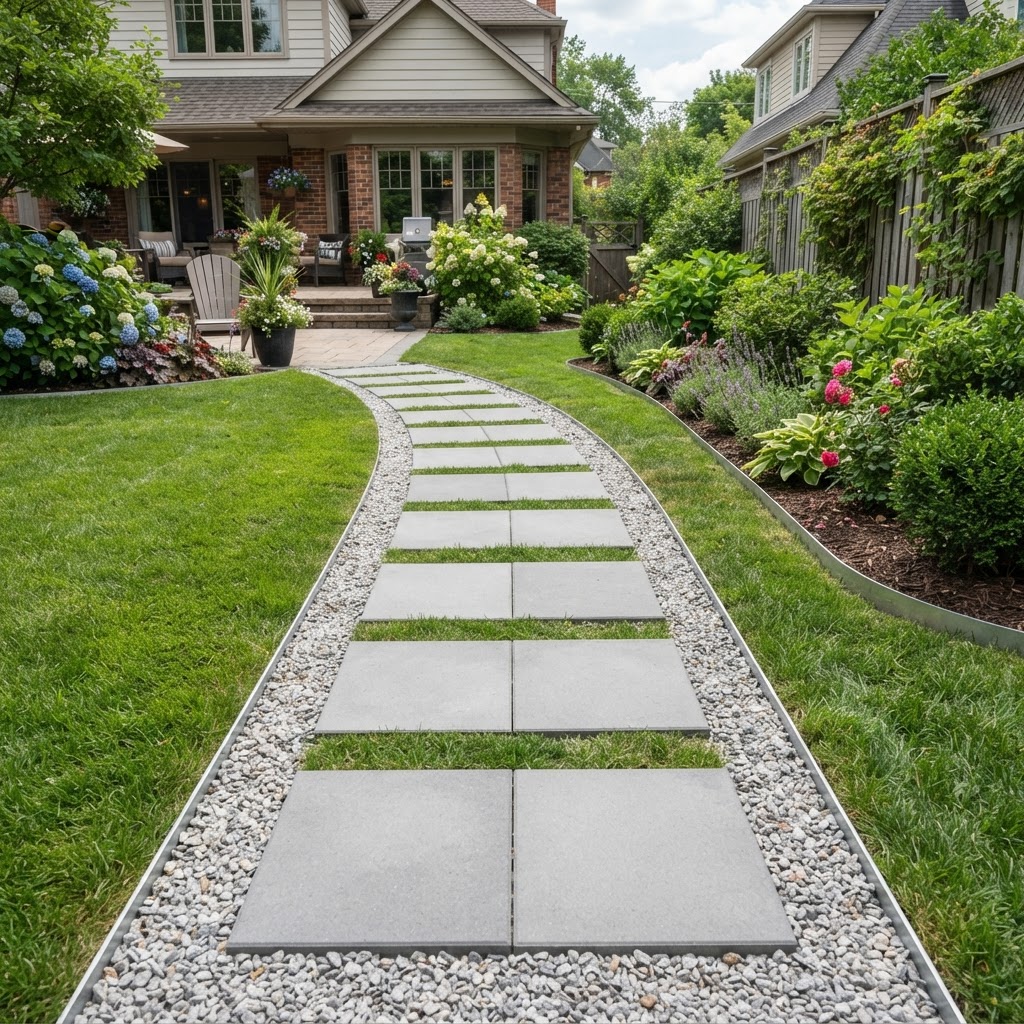
Large Concrete Step Stone
Inspired by: Pavestone 16 in. x 16 in. x 1.77 in. Pewter Square Concrete Step Stone
Approx. retail price: $5.97 each ($3.35/sq. ft.)
A larger-format concrete unit that can work well for stepping paths, landings, or simple patio areas.
View product details ↗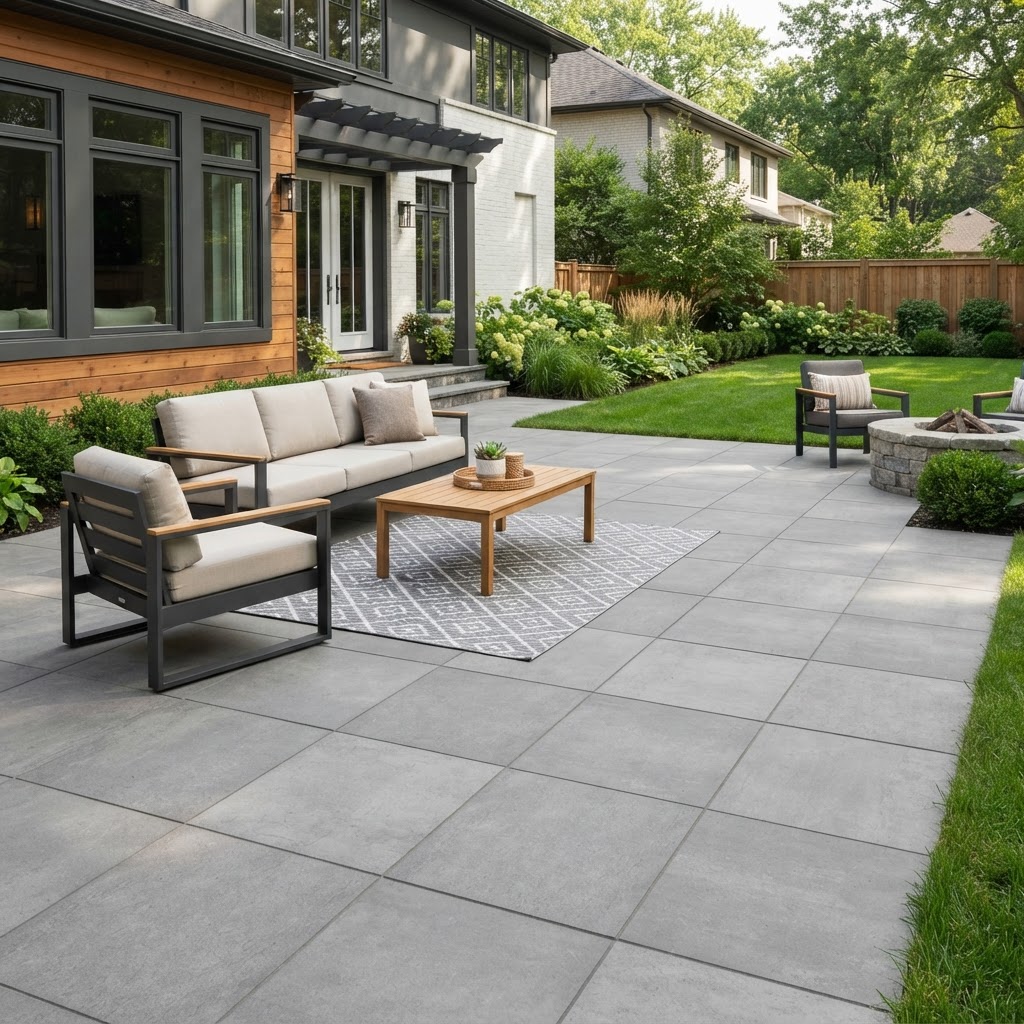
Large-Format Porcelain Paver
Inspired by: Corso Italia Pietra Chrome 24 in. x 24 in. Porcelain Paver
Approx. retail price: $19.97 each ($5.15/sq. ft.)
A more refined large-format paver option that gives a clean, contemporary look.
View product details ↗These examples show retail material pricing only. A finished project usually costs more because installation may also involve excavation, grading, compacted base material, drainage work, cutting, edging, and labor.
Example Home Depot retail prices checked October 2026. Prices and availability vary by location.
Source: Current example product pricing from Home Depot product listings, reviewed for homeowner budgeting context.
Images are AI-generated illustrations of comparable paver styles, not photographs of the specific retail products shown. This website is not affiliated with or endorsed by The Home Depot.
Not Sure What's Possible? Let's Explore Your Options.
You don't need a finished design or every detail figured out. Share what you're imagining, what you'd like to improve, and the budget you have in mind. When you're ready, request guidance and a personalized estimate to see what could work for your home.
Getting Started Is Simple
Tell Us About Your Property
Share what you'd like to improve, whether it's a new patio, a walkway, a landing, or a paver area that connects to a retaining wall.
Discuss Your Project
Review your goals, ask questions, and get help identifying the next step based on your property and the kind of work you have in mind.
Request an Estimate
If you're ready to move forward, request an estimate and take the next step toward improving your outdoor space.
Keep Your Outdoor Space Looking Its Best
A well-built paver surface needs only modest care to stay attractive. Sweep away debris, rinse off occasional staining, and keep an eye on joint sand so the surface stays firm and even.
After heavy rain, check that water is moving away from the area as intended. If you notice settling, spreading joints, or edge movement, addressing it early helps protect the rest of the installation.
Before You Build
Four things worth considering before starting your paver project.
Know What's Underneath
Buried utilities, irrigation lines, and tree roots can affect excavation and layout. Identifying them early helps avoid surprises during construction.
Plan Drainage First
Where water goes matters as much as where the pavers go. Surface grading and drainage paths should be settled before installation begins.
Match the Paver to the Purpose
A walkway, a driveway-adjacent landing, and a fire-pit patio place different demands on a surface. The paver and base should suit how the space will be used.
Connect to the Surrounding Yard
Pavers should meet lawns, beds, steps, and walls at sensible elevations. Planning those transitions keeps the whole yard working together.
Paver Installation FAQs
Planning a patio or walkway often raises questions about materials, drainage, installation, cost, and maintenance. These answers cover the practical details homeowners commonly want to understand.
How much does a paver patio cost in Cartersville?
Published installation-cost benchmarks put paver patios at approximately $8–$25 per square foot. That means a 200-square-foot patio costs about $1,600–$5,000, a 300-square-foot patio about $2,400–$7,500, and a 400-square-foot patio about $3,200–$10,000.
For example, a straightforward patio on level ground may cost less than one requiring substantial excavation, drainage improvements, steps, or retaining walls. Material selection, borders, patterns, and site access also affect the total.
These figures are national planning benchmarks rather than verified Cartersville-specific quotes. They provide a useful starting point for deciding what size and type of project fits your budget.
How long does paver installation take?
A small, straightforward paver patio or walkway can often be installed in several working days. Larger projects, extensive grading, drainage improvements, steps, and retaining walls can extend the schedule to a week or longer.
The work generally progresses through site layout, excavation, base preparation, paver installation, joint finishing, and cleanup. Proper base preparation is particularly important and should not be rushed simply to finish sooner.
When reviewing a contractor's estimate, ask for the anticipated start date, number of working days, and any site conditions that could extend the schedule.
What makes a paver patio last?
A properly prepared and compacted base, effective drainage, and secure edge restraints are among the most important factors in a long-lasting paver patio.
The base supports the pavers and helps distribute weight. Edge restraints keep units from spreading, while appropriate joint materials help maintain the finished surface.
Excavation depth and base construction should suit the soil, intended use, and specific paving system.
Even attractive, expensive pavers can settle or shift when the underlying preparation is inadequate. Ask contractors to explain the base materials, compaction process, drainage plan, and edge restraints included in their proposals.
How should drainage be handled around a paver patio?
A paver patio should be designed to move surface water away from the home and prevent water from collecting against foundations, walls, or adjacent structures.
The layout should account for the existing slope, downspouts, surrounding landscaping, and where runoff can safely flow.
Some patios can use appropriately sloped surfaces to manage water. Others benefit from drains, grading adjustments, or additional drainage improvements.
When comparing plans, ask where rainwater will go during a heavy storm. A beautiful patio should not create drainage problems for the house or surrounding yard.
Can pavers be installed on a sloped backyard?
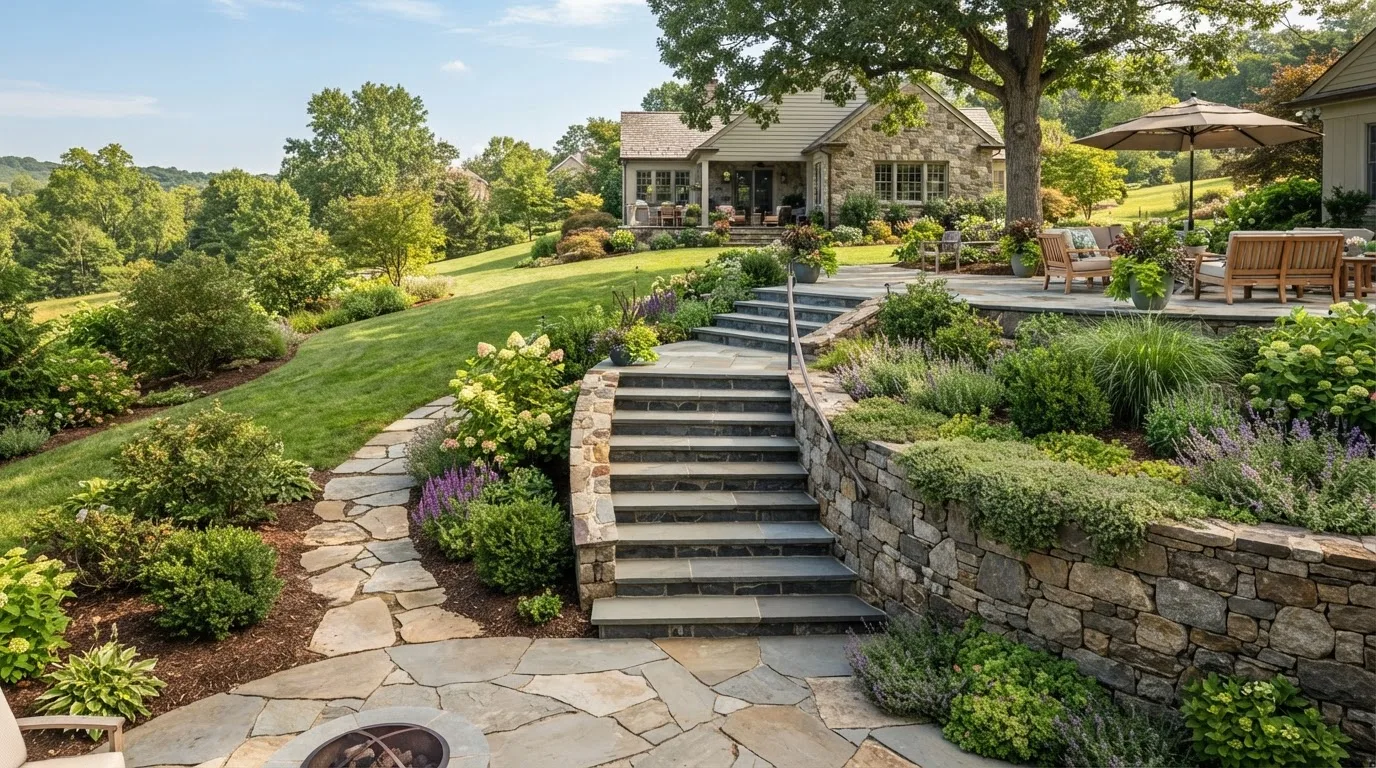
Yes. Sloped backyards can accommodate paver patios and walkways, often by incorporating steps, retaining walls, terraces, or changes in elevation.
For a gentle slope, grading adjustments may provide enough room for a usable paved area. Steeper yards may benefit from several connected levels rather than one large, flat patio.
The layout should consider how people move between spaces, where water flows, and how the surrounding soil will be supported.
A sloped yard can create opportunities for attractive outdoor spaces with distinct seating, gathering, and garden areas.
Which paver materials work best for patios and walkways?
Concrete pavers are a versatile choice for many residential patios and walkways because they come in numerous colors, shapes, textures, and patterns. Natural stone and suitable outdoor-rated porcelain pavers offer additional design options.
Traditional rectangular concrete pavers work well for familiar brick-style patterns. Larger units can create a simpler, more contemporary appearance. Textured or tumbled finishes provide a more rustic look.
For walkways, consider traction, maintenance, and how the surface meets steps or entrances. For patios, consider furniture placement, surface comfort, and the overall appearance.
The material examples above show several styles and retail price points to help you compare options.
Are concrete or natural-stone pavers better?
Concrete pavers generally offer more consistent dimensions and a wider selection of manufactured colors and patterns, while natural stone provides distinctive textures and variation from piece to piece.
Concrete pavers are often easier to coordinate into uniform patterns and can offer a practical balance of appearance and cost.
Natural stone can create a distinctive appearance, but the units may vary in thickness, shape, texture, and price. Some stone types also require additional care or installation considerations.
For either material, prioritize suitability for outdoor use, traction, installation quality, maintenance requirements, and how the finished surface complements your home.
Will weeds grow between pavers?
Yes, weeds can occasionally grow between pavers, but proper joint materials and routine cleaning can help reduce them.
Weed seeds commonly arrive from wind, birds, and surrounding landscaping. They can take root when soil and organic debris accumulate in the joints.
Appropriate joint materials, including polymeric sand where suitable for the paving system, can help limit unwanted growth.
Regular sweeping, removing accumulated debris, and addressing damaged joints are useful preventive measures.
A well-maintained paver patio should not require constant weeding.
Can pavers connect to steps or retaining walls?
Yes. Paver patios and walkways can be integrated with steps, landings, retaining walls, and other hardscape features to connect different areas of a property.
For example, a raised patio might connect to the lawn through a broad set of steps. A walkway could follow the edge of a retaining wall or lead from a driveway to an elevated entrance.
The important details include finished elevations, safe walking surfaces, drainage, edge support, and how the materials meet.
Planning these elements as one connected outdoor space generally produces a more cohesive appearance than treating each feature as an unrelated project.
How much maintenance does a paver patio need?
Most paver patios benefit from regular sweeping, occasional cleaning, and periodic inspection of joints, edges, and drainage.
Remove leaves and soil before they accumulate between the pavers. Clean spills using methods appropriate for the material, and keep nearby landscaping from covering the surface.
Over time, some installations may need joint-material replenishment, individual paver replacement, or correction of localized settlement.
Sealing is an option for certain materials, but it is not universally necessary or appropriate. Follow the manufacturer's guidance for the specific paver and jointing system.
Can damaged or settled pavers be repaired?
Yes. One advantage of many individual-unit paver systems is that damaged pavers can often be replaced and settled sections can sometimes be lifted and reset.
A cracked or stained individual unit may be replaceable without rebuilding the entire patio.
For an uneven section, the pavers can often be removed so the underlying base can be examined and corrected before reinstalling them.
The underlying cause matters. Poor compaction, erosion, drainage problems, or failed edge restraints should be addressed rather than simply leveling the visible surface.
That repairability is a practical advantage of many segmental paver installations.
How should I prepare for a paver installation estimate?
Start with the location, approximate dimensions, and intended use of the patio or walkway. Photographs and a few design examples can make the discussion more productive.
Think about whether the space will be used for dining, outdoor furniture, grilling, a fire pit, or simply connecting parts of the property.
It also helps to identify:
- Preferred colors, patterns, or materials
- An approximate project budget
- Drainage problems or areas where water collects
- Slopes, steps, retaining walls, or difficult access
- Existing trees, landscaping, or features you want to preserve
You do not need a finished design before requesting an estimate. Clear priorities and useful photographs provide a good starting point.
Paver Installation in Cartersville and North Georgia
More Ways to Improve Your Outdoor Space
Explore other landscaping and hardscaping services available in Cartersville and nearby communities.