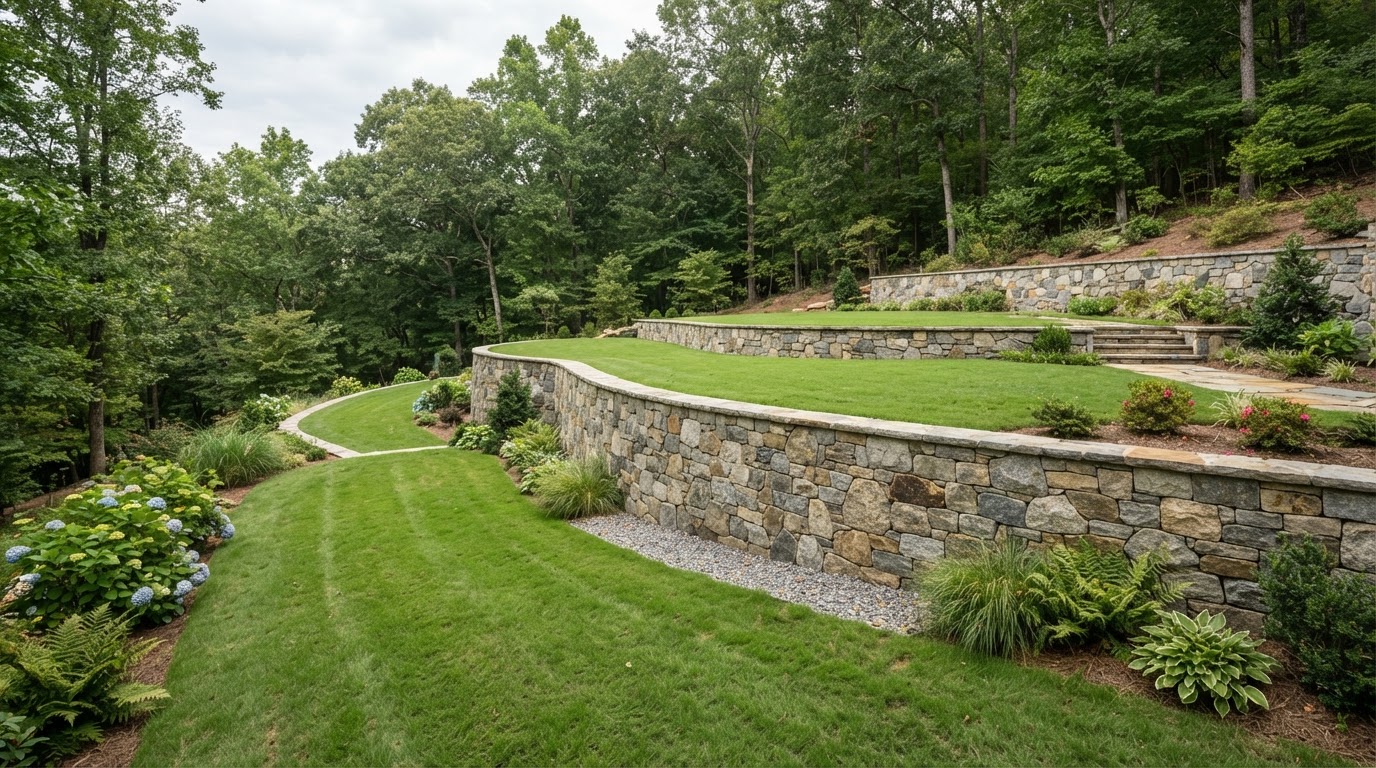
Built for Slopes and Grade Changes
Retaining Wall Contractors in Cartersville, GA
Show us the slope, failing wall, or space you want to improve. Get a Free Estimate
Built for Slopes and Grade Changes
Show us the slope, failing wall, or space you want to improve. Get a Free Estimate
If soil is washing, an old wall is leaning, or a steep section of yard is keeping you from using part of the property, a retaining wall may be the right solution. The important part is determining what the wall actually needs to accomplish before choosing its shape or material.
Retaining Wall Cartersville builds and replaces residential retaining walls throughout Cartersville and nearby North Georgia communities. We use the slope, soil conditions, drainage patterns, available access, surrounding structures, and intended use of the finished area to guide the plan.
A wall can move for several reasons. The foundation beneath it may not be adequate. Water may collect behind it. The material behind the wall may not drain properly. The surrounding grade can direct runoff toward the structure. In other cases, the wall may be carrying more load than the original design was intended to handle.
When replacing a failing wall, we do not want to simply reproduce the same conditions. We look for visible clues about why movement occurred and plan the replacement around the actual site.
Water is one of the most important considerations in retaining wall work. Saturated soil becomes heavy, and trapped water can increase pressure behind a wall. The drainage approach varies by design and property, but it needs to be considered from the beginning.
We also look beyond the backside of the wall. Roof runoff, uphill slopes, neighboring grade, driveways, patios, and lawn contours can all influence how water moves through a yard.
Retaining walls are not only for problem areas. They can also make a sloped yard more practical. A wall may help create a flatter lawn, establish a patio elevation, support a planting area, define a driveway edge, or turn an awkward bank into a cleaner transition between levels.
Leaning, bulging, separated, or badly eroded walls deserve a closer look. Depending on the condition and purpose of the wall, replacement may involve removing old material, excavating the area, correcting the base and drainage approach, and rebuilding the surrounding grade.
Some larger, taller, heavily loaded, or otherwise complex retaining walls may require additional design, permitting, or engineering based on local requirements and site conditions. We identify those concerns early so the project can be planned appropriately.
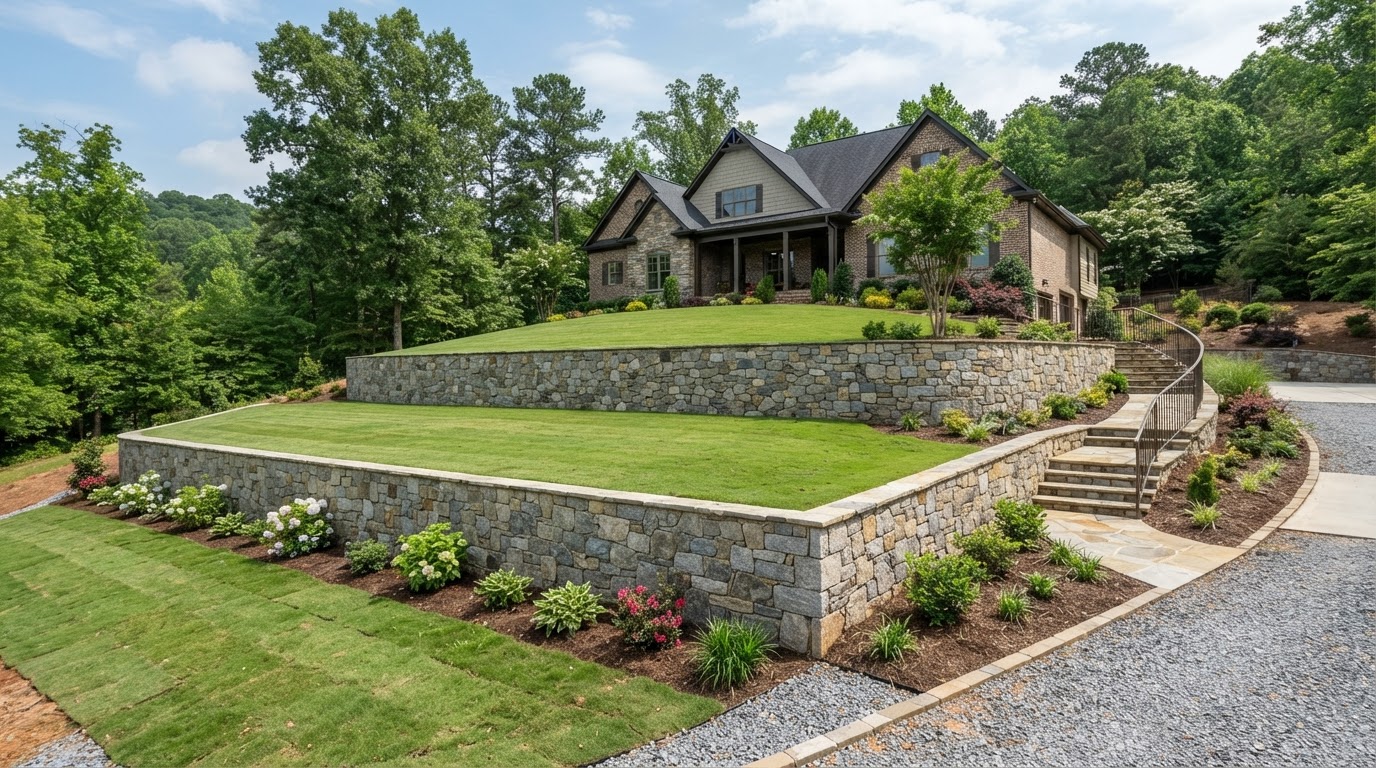
Every wall has a different job. We begin with the problem or goal and then plan the structure around the property.
These walls hold grade where a bank or elevation change is difficult to maintain. They can also create cleaner transitions between upper and lower sections of a yard.
Old walls that lean, bow, separate, or lose soil may need replacement. We examine likely causes of movement and plan the new work around drainage, base conditions, and surrounding grade.
Landscape walls can shape planting areas, define lawn edges, and organize moderate elevation changes. Even smaller walls benefit from careful preparation and water management.
A wall can establish or support an elevation for a patio, walkway, landing, or other hardscape area. We coordinate the wall and finished surface so the project works as one system.
On some sloped properties, a retaining wall can help create additional usable lawn or gathering space. The practical amount of space depends on the grade, wall height, setbacks, access, and surrounding conditions.
| Service | Estimated Cost | Average |
|---|---|---|
| Small landscape wall | Custom estimate | Depends on height, length, and access |
| Residential retaining wall | Custom estimate | Depends on site and materials |
| Wall replacement | Custom estimate | Includes removal and rebuilding needs |
| Wall with grading or hardscape | Custom estimate | Based on combined project scope |
Retaining wall cost is influenced by wall length and height, excavation, access, soil conditions, drainage, material, removal of an existing wall, disposal, grading, and any design or permitting requirements. We provide project-specific estimates after reviewing the site.
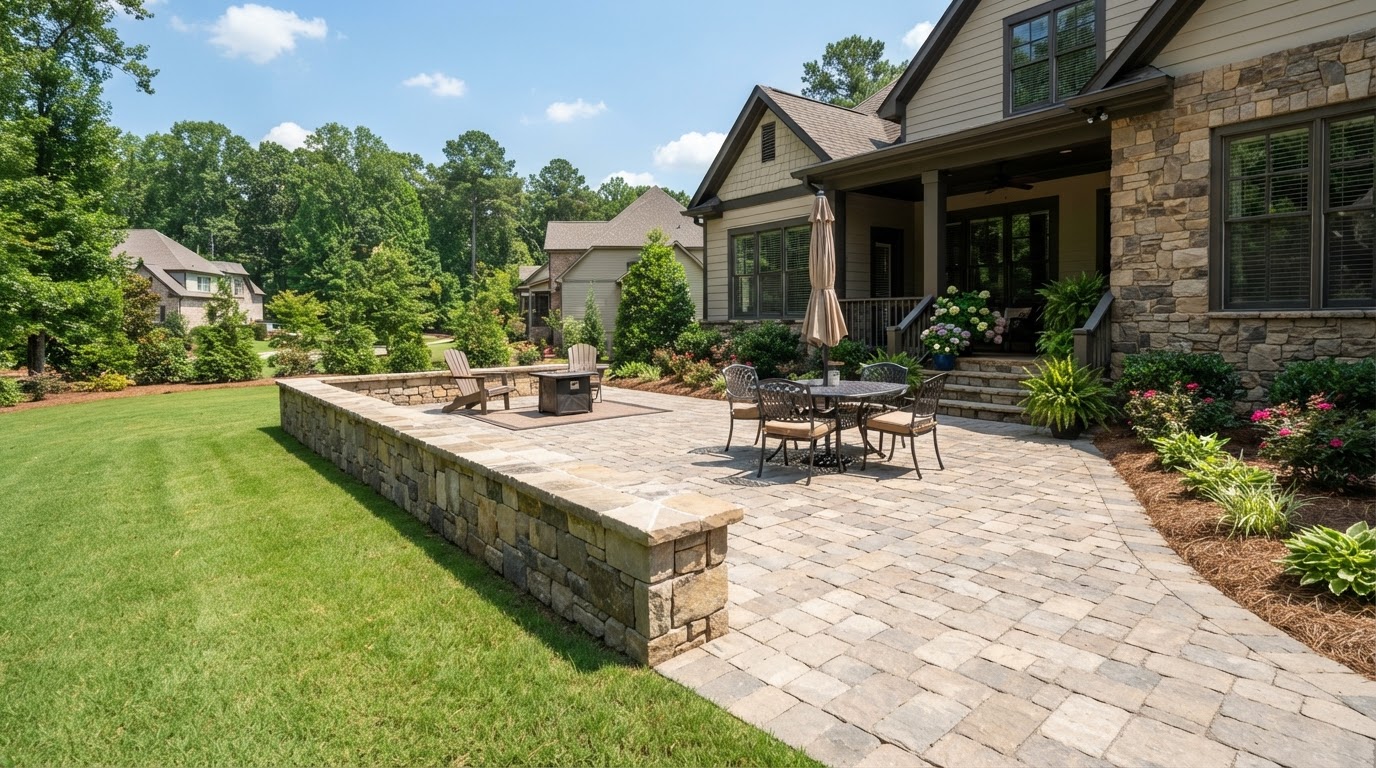
Slope management and wall construction are at the center of what we do, so we naturally look at grading, drainage, and surrounding outdoor features together.
When an old wall has moved or soil keeps washing, we look at visible site conditions instead of assuming the wall itself is the only issue.
A wall should solve the structural or grade problem and also leave the surrounding lawn, patio, bed, or walkway in a practical condition.
Our team works throughout Cartersville and surrounding North Georgia communities where slopes, clay soils, wooded lots, and runoff are common parts of outdoor projects.
Have a leaning wall, steep bank, erosion problem, or yard you want to level out?
Free, no obligations
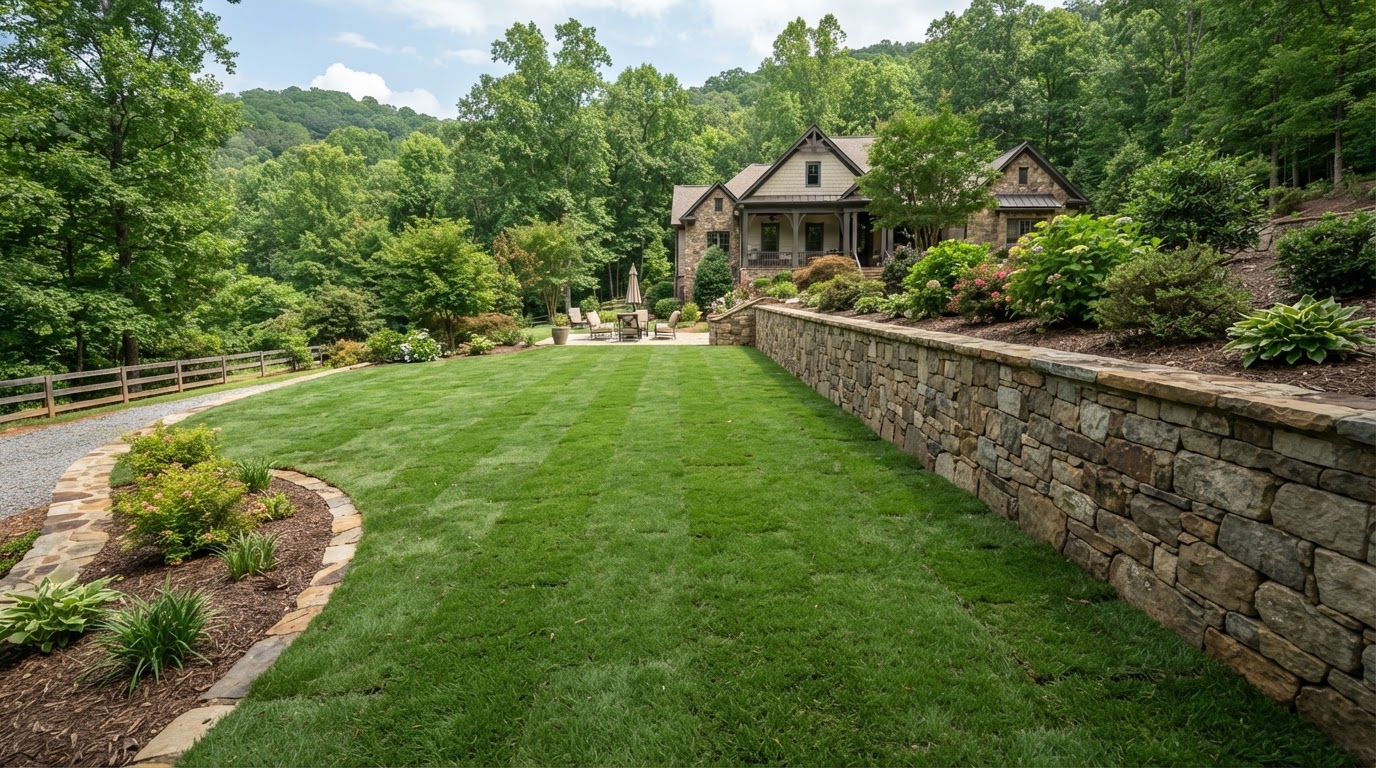
We determine whether the project is intended to replace a failing wall, manage erosion, hold a slope, create usable space, or support another outdoor feature.
We look at grade, access, water movement, nearby structures, existing walls, soil conditions, and the finished area around the proposed wall.
The wall layout, preparation, drainage approach, material, and surrounding grade are considered together.
Construction begins with excavation and foundation preparation before the wall, drainage components, backfill, and finished grade are completed.
When included in the project, we restore or improve the nearby lawn, landscape, pavers, or hardscape so the wall fits naturally into the property.