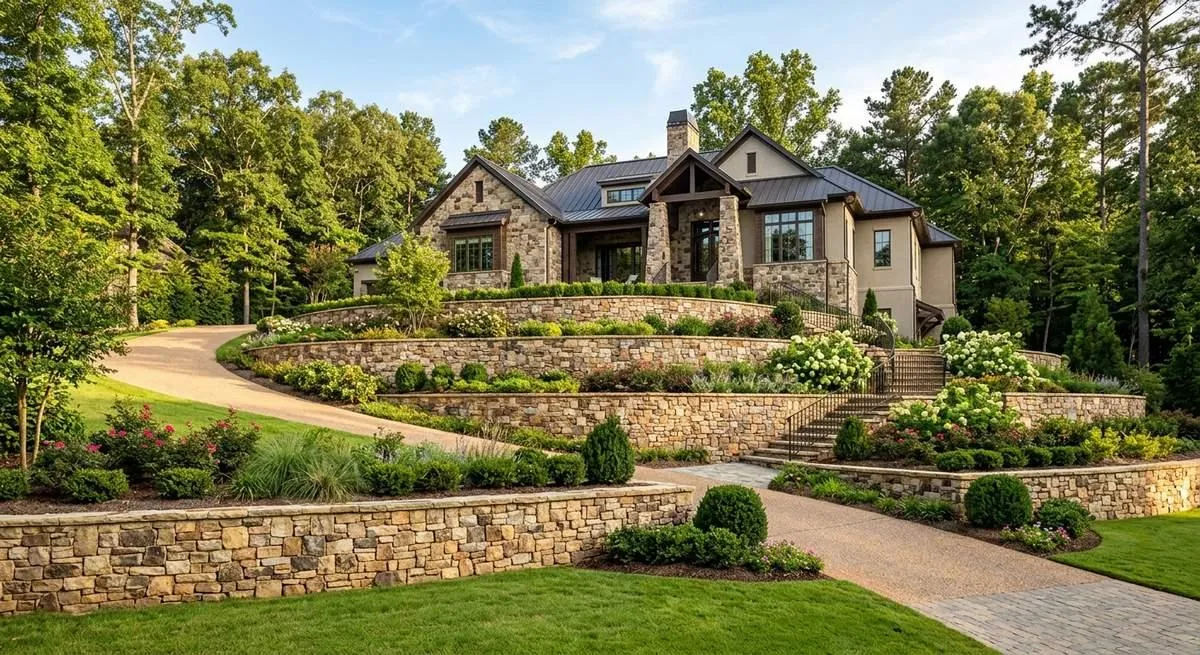
Retaining Walls in Cartersville, GA
Transform sloped or unusable land into beautiful, functional outdoor space. From new retaining walls to repairs and replacements, tell us about your project.
Is Your Yard Showing Signs of Trouble?
Erosion, standing water, unstable slopes, and deteriorating retaining walls can become more than landscaping problems. Recognizing the warning signs early can help you protect your property and avoid more extensive repairs.
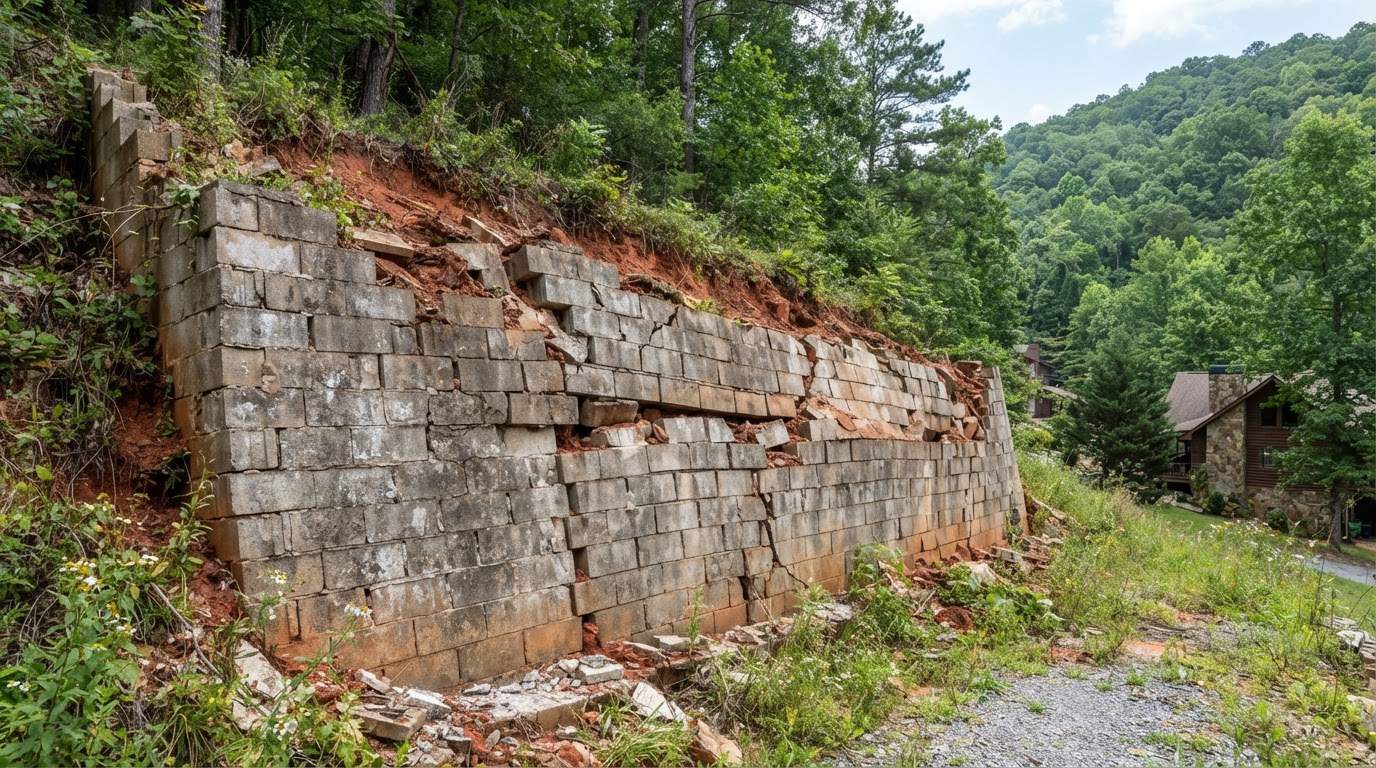
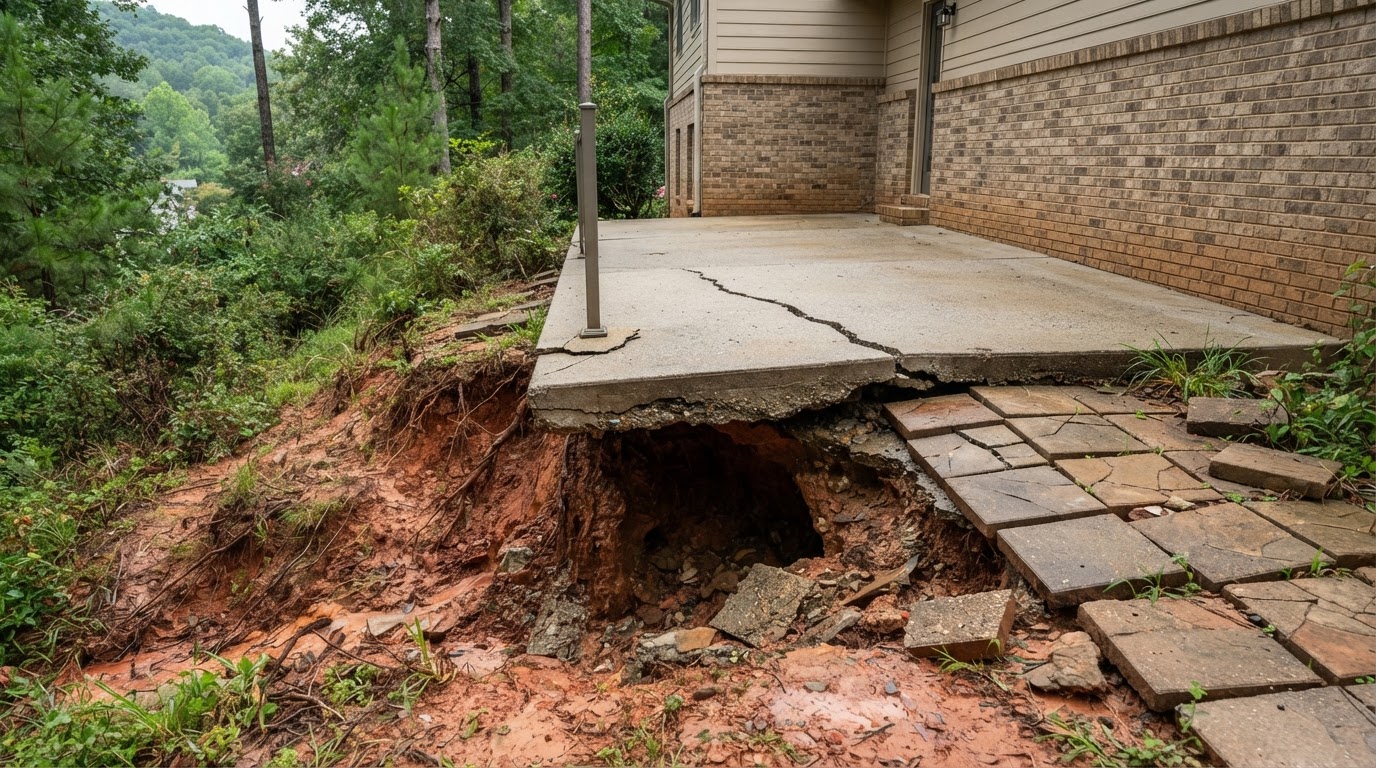
Is Your Retaining Wall Leaning or Cracking?
A wall that's bulging, separating, or leaning may be losing its ability to hold back soil. Ignoring the warning signs could lead to additional movement or even collapse.
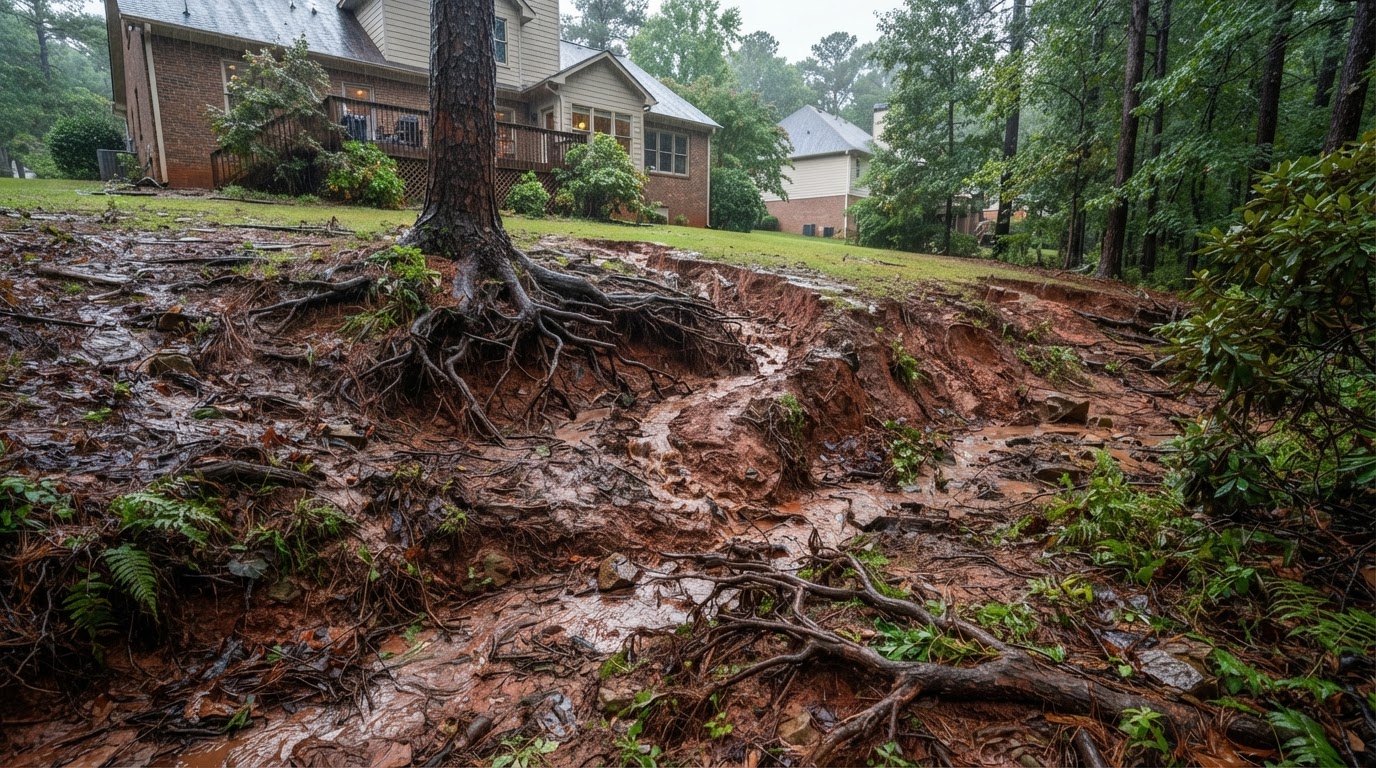
Is Rain Washing Away Your Soil?
Erosion can strip away valuable topsoil, expose roots, and undermine landscaping, walkways, and other improvements. The longer it continues, the more difficult the damage may become to correct.
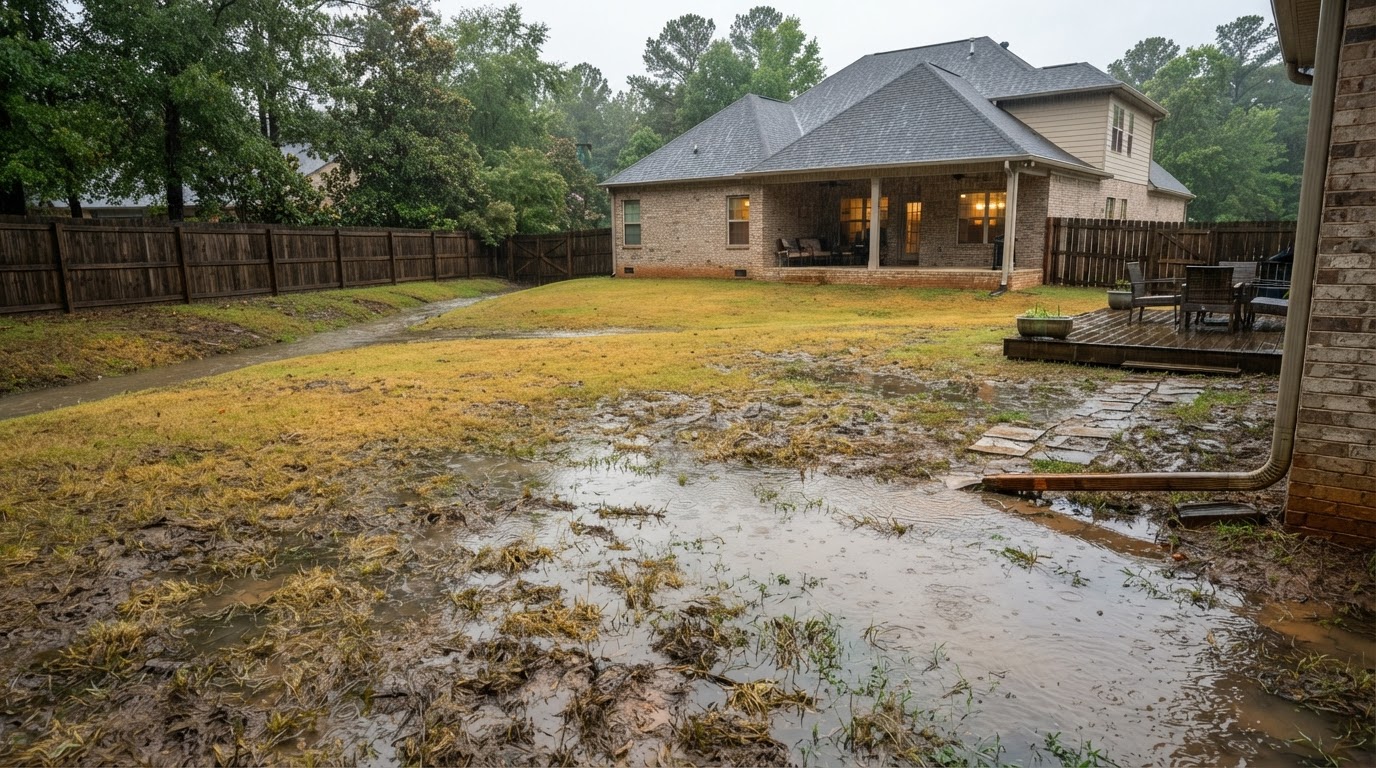
Does Water Collect After Every Storm?
Standing water and uncontrolled runoff can damage your lawn, saturate the soil, and increase pressure behind retaining walls. The source of the problem matters as much as where the water collects.
Is Your Sloped Yard Difficult to Maintain?
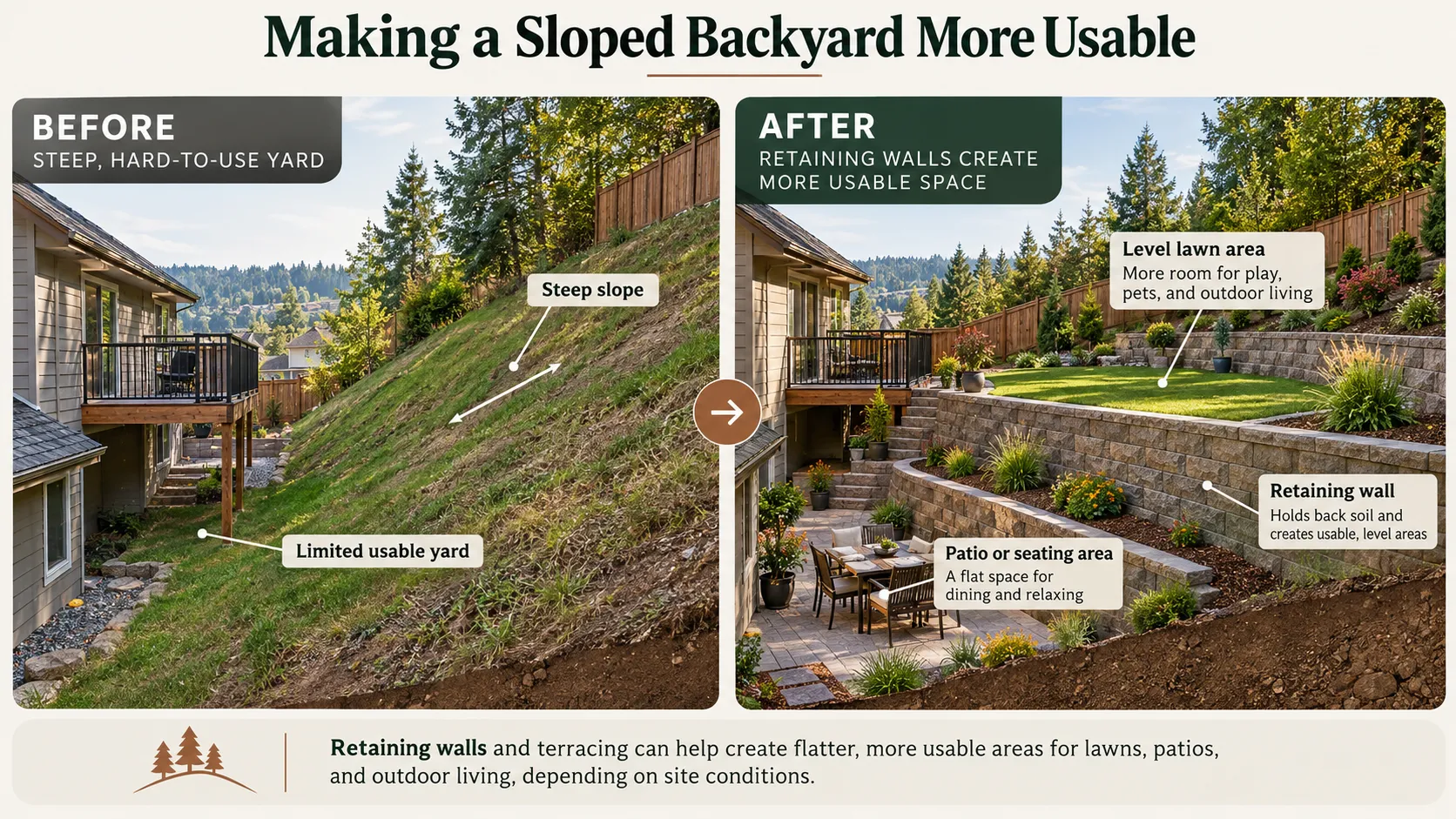
Steep hillsides can make mowing, gardening, and enjoying your yard frustrating or even unsafe. Terracing and properly designed retaining walls may create more practical outdoor spaces.
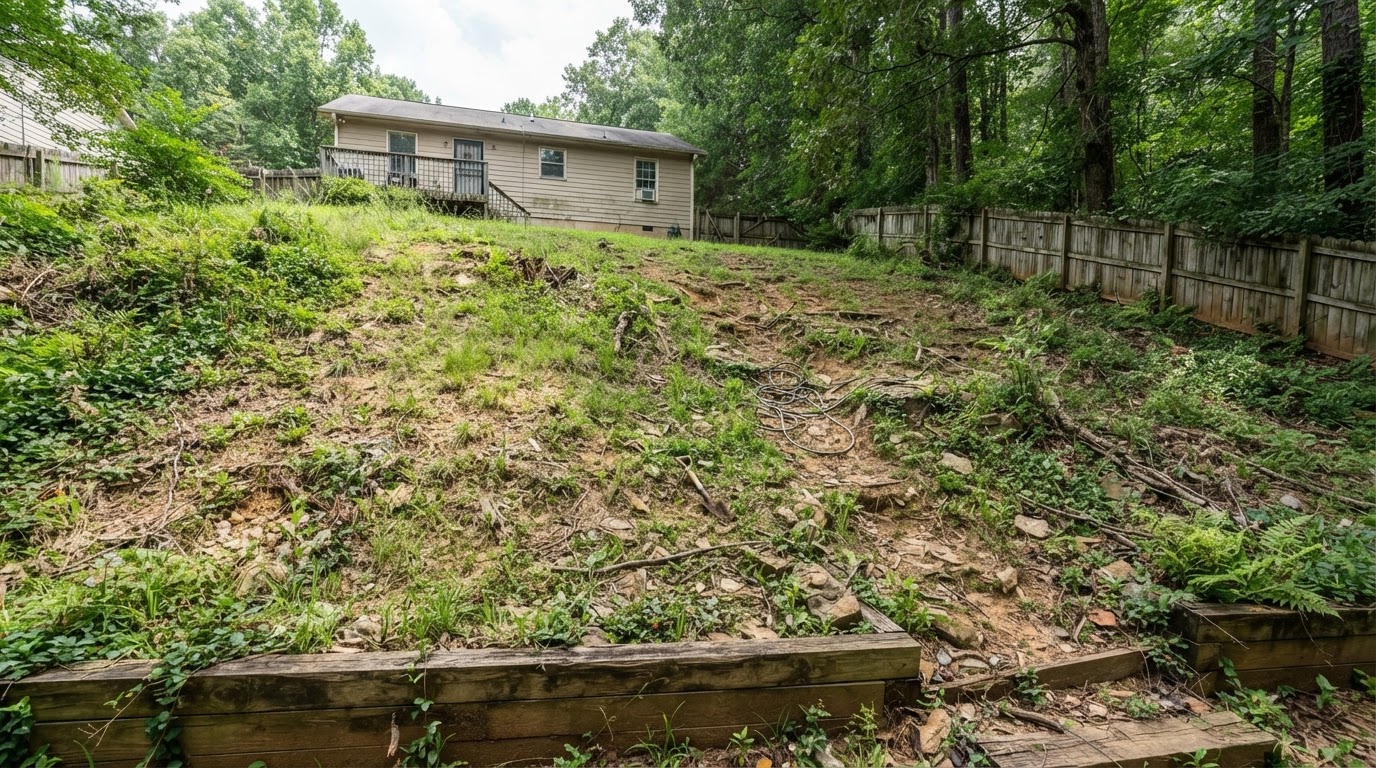
Are You Worried About Your Home or Property?
Shifting soil and uncontrolled drainage can threaten patios, driveways, landscaping, and, in some circumstances, nearby foundations. Warning signs deserve attention before damage spreads.
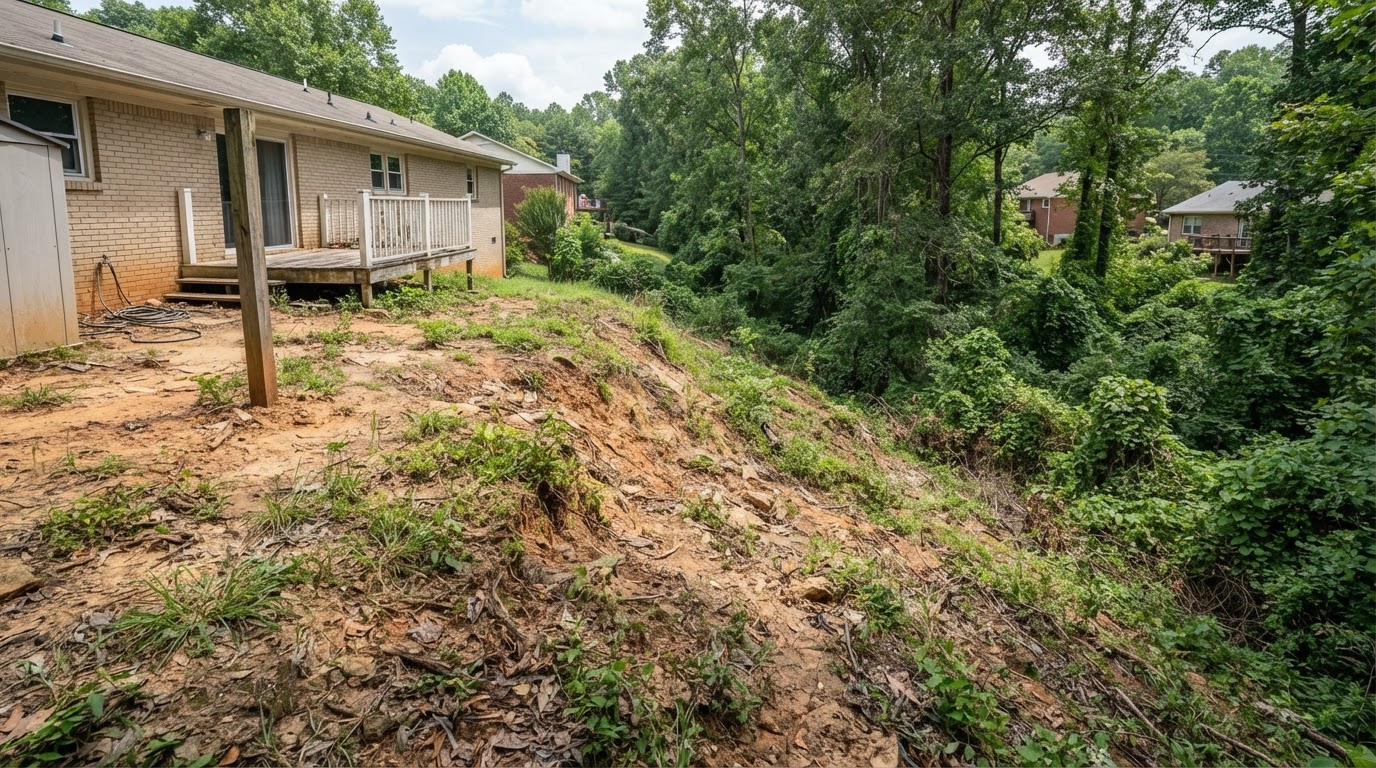
Is Your Sloped Yard Wasting Valuable Space?
Steep slopes can leave much of your backyard difficult to use. Without level areas, you may have limited room for patios, play areas, gardens, or outdoor gatherings.
Not Sure What's Causing the Problem?
You don't have to figure it out alone. Tell us what you're seeing, and we'll help you take the next step toward finding the right solution.
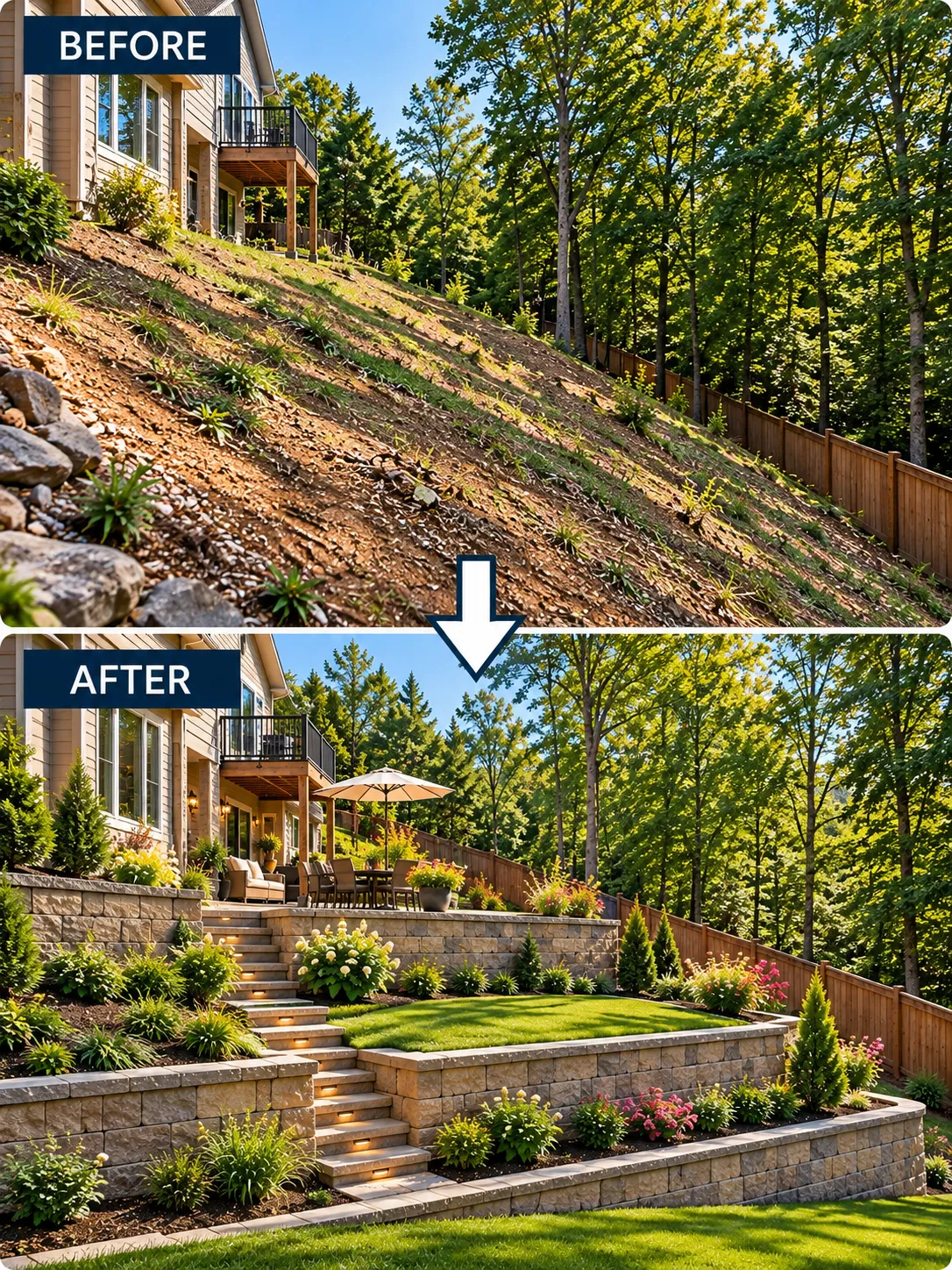
Turn a Problem Yard Into a Property You'll Enjoy
A retaining wall can do more than hold back soil. The right solution can help manage erosion, make challenging slopes more useful, and create outdoor spaces that look and function better.
Whether you're dealing with a deteriorating wall or planning improvements to your property, the best place to start is understanding what your yard needs.
-
Manage Soil and Slopes
Help control soil movement and make difficult changes in elevation easier to manage.
-
Create More Usable Space
Turn sloping areas into practical spaces for lawns, gardens, patios, and outdoor activities.
-
Address Failing Retaining Walls
Explore replacement options that account for drainage, soil conditions, and the demands placed on the wall.
More Ways to Improve Your Outdoor Space
A retaining wall may solve one challenge, but your plans for the property don't have to stop there. Explore hardscaping, paver installation, landscaping, and lawn improvements that can help create a more attractive, practical outdoor space.
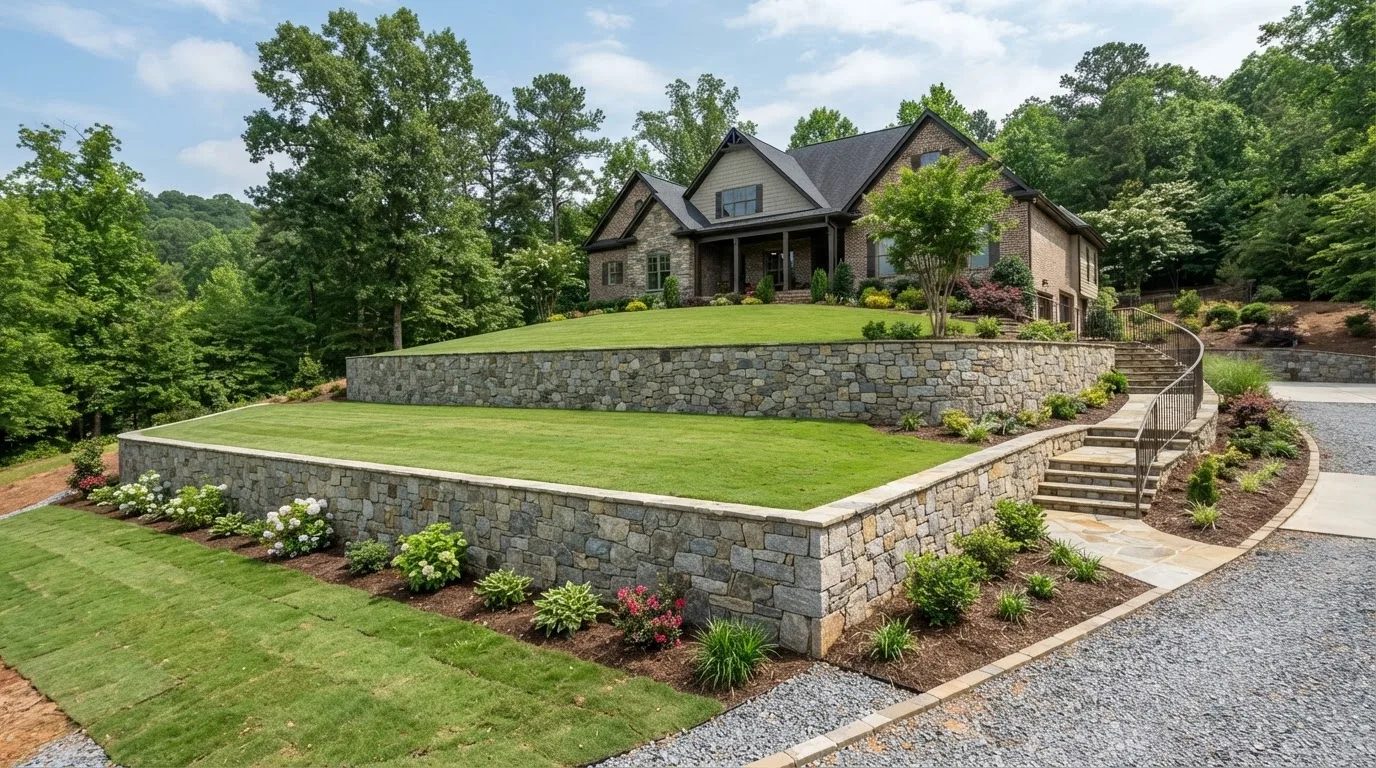
Hardscaping Services
Create inviting outdoor spaces with patios, walkways, steps, and other durable landscape features.
Explore Hardscaping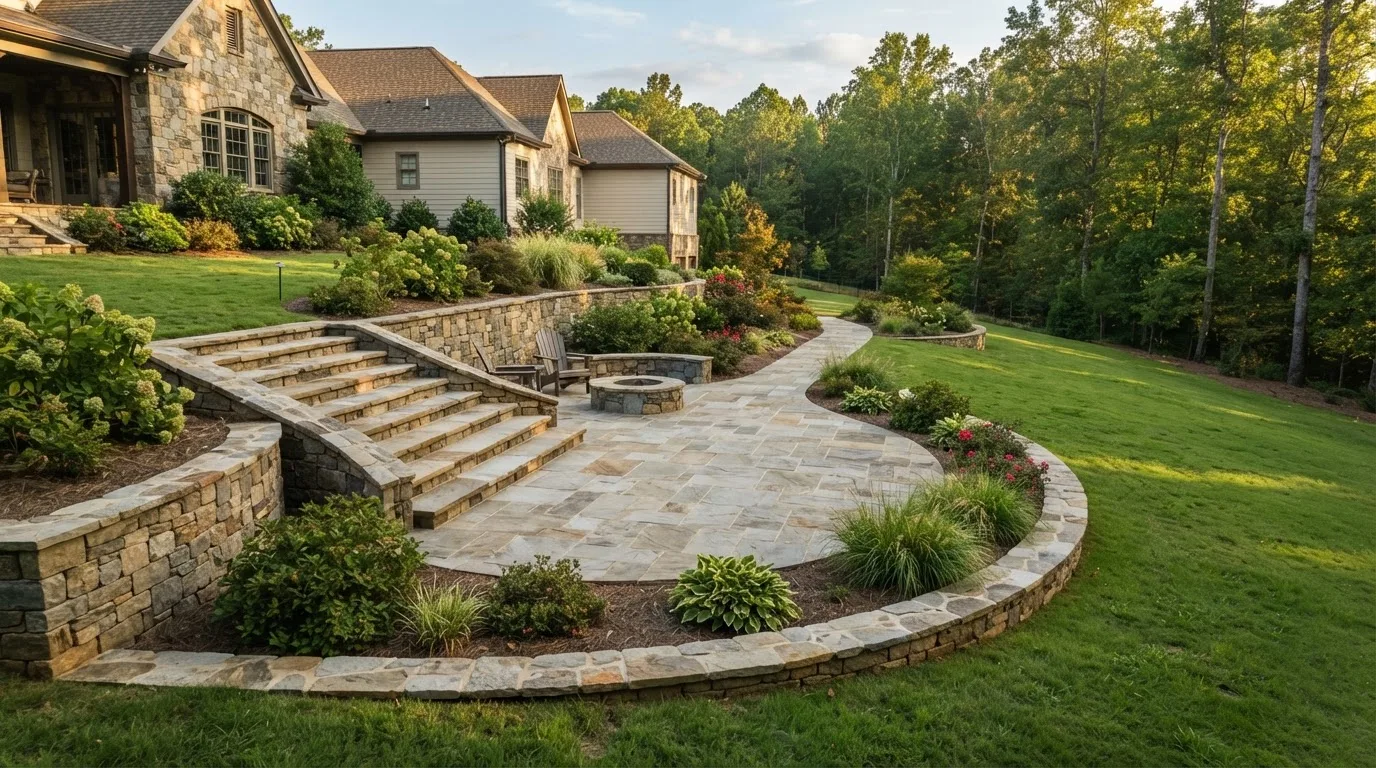
Paver Installation
Add beauty and function to patios, walkways, and gathering spaces with thoughtfully planned paver surfaces.
Explore Paver Installation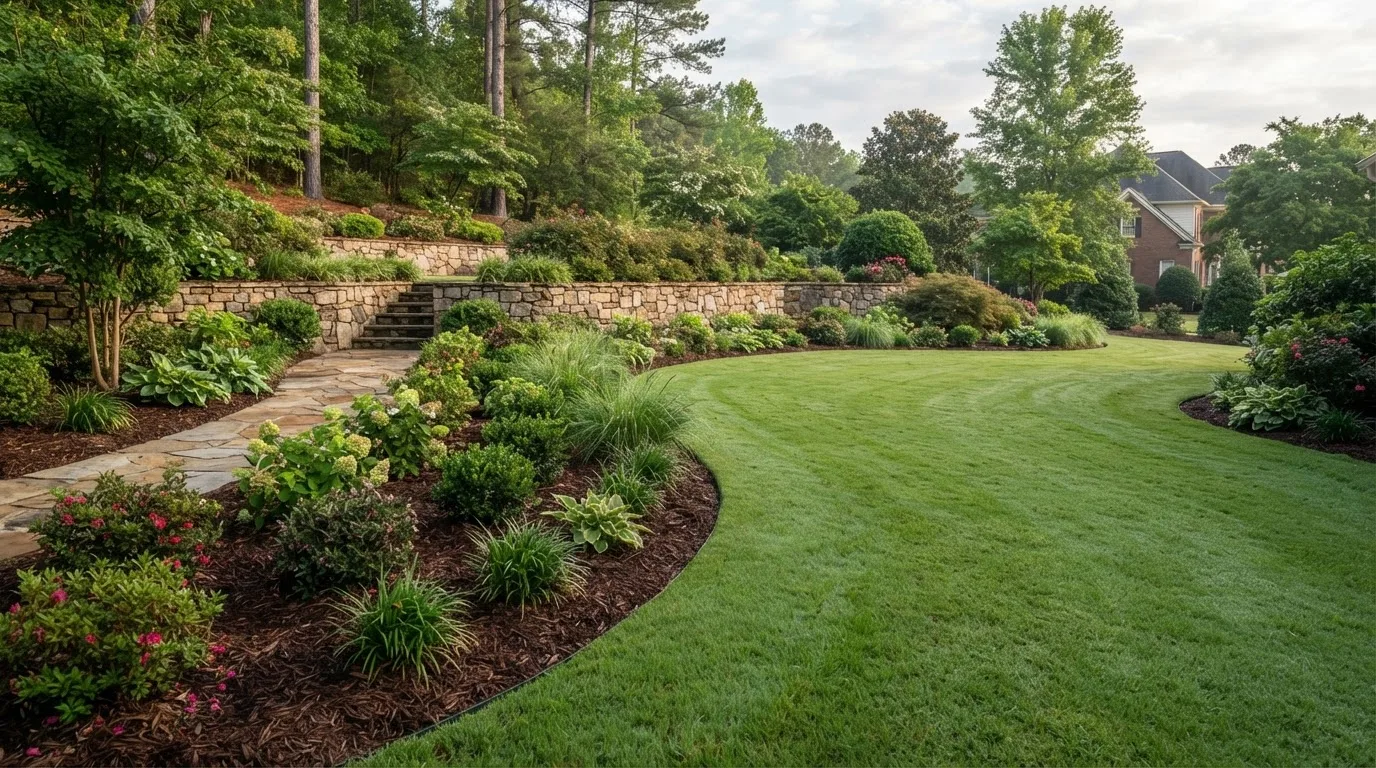
Landscaping
Improve your property's appearance with planting beds, landscape features, and outdoor improvements suited to your space.
Explore Landscaping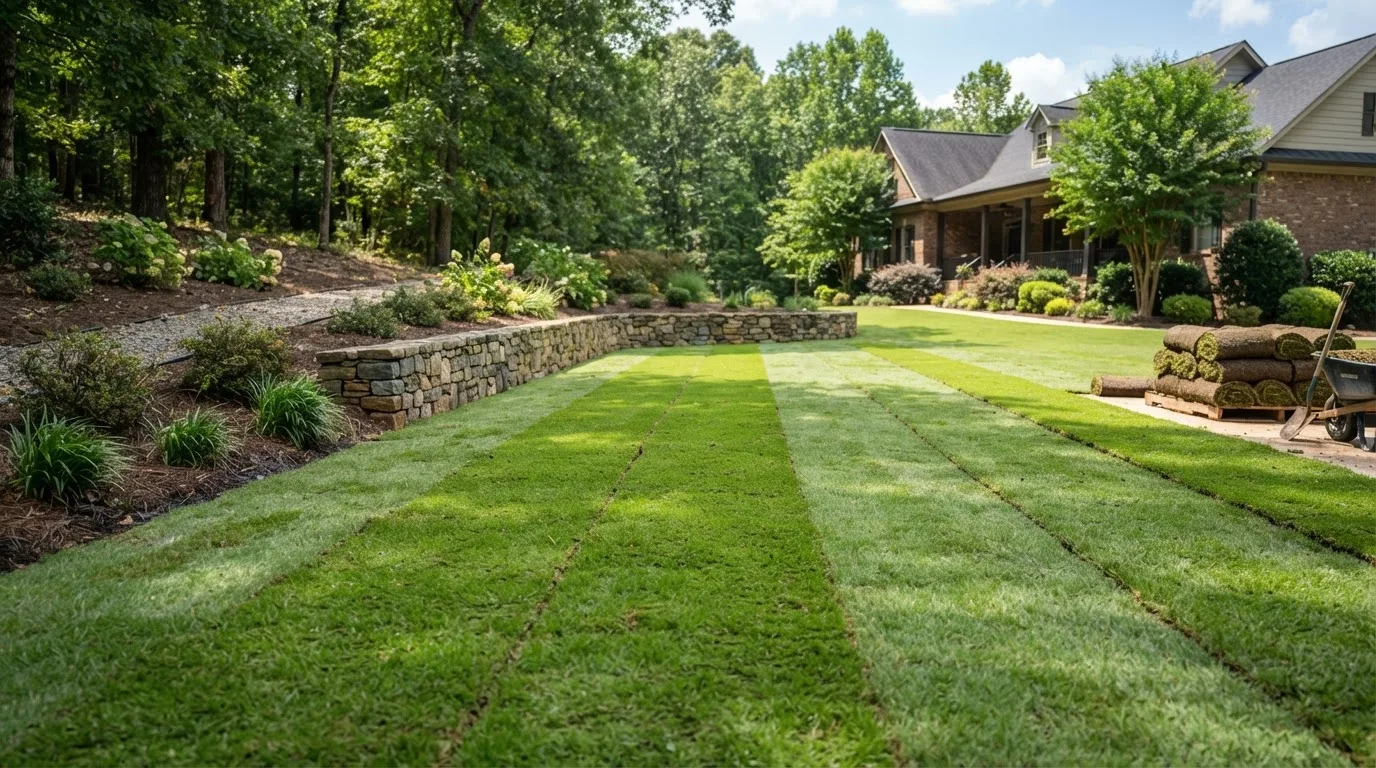
Sod & Turf Installation
Replace bare or patchy areas with fresh turf and create a greener, more inviting lawn.
Explore Sod & TurfRetaining Wall Solutions for Homes and Commercial Properties
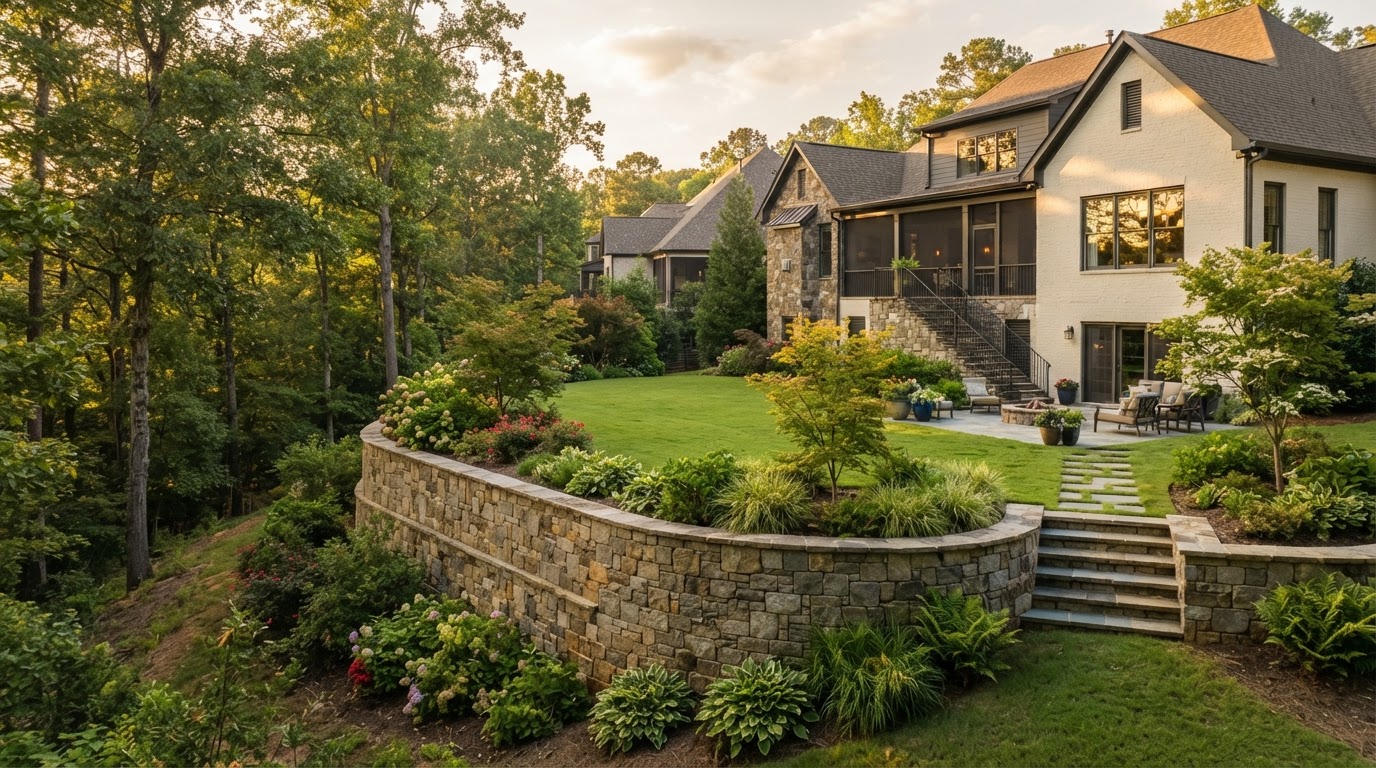
Retaining Walls for Homeowners
From replacing a deteriorating wall to creating more usable yard space, retaining walls can help homeowners manage slopes, protect landscaping, and improve their outdoor living areas.
Explore Residential Solutions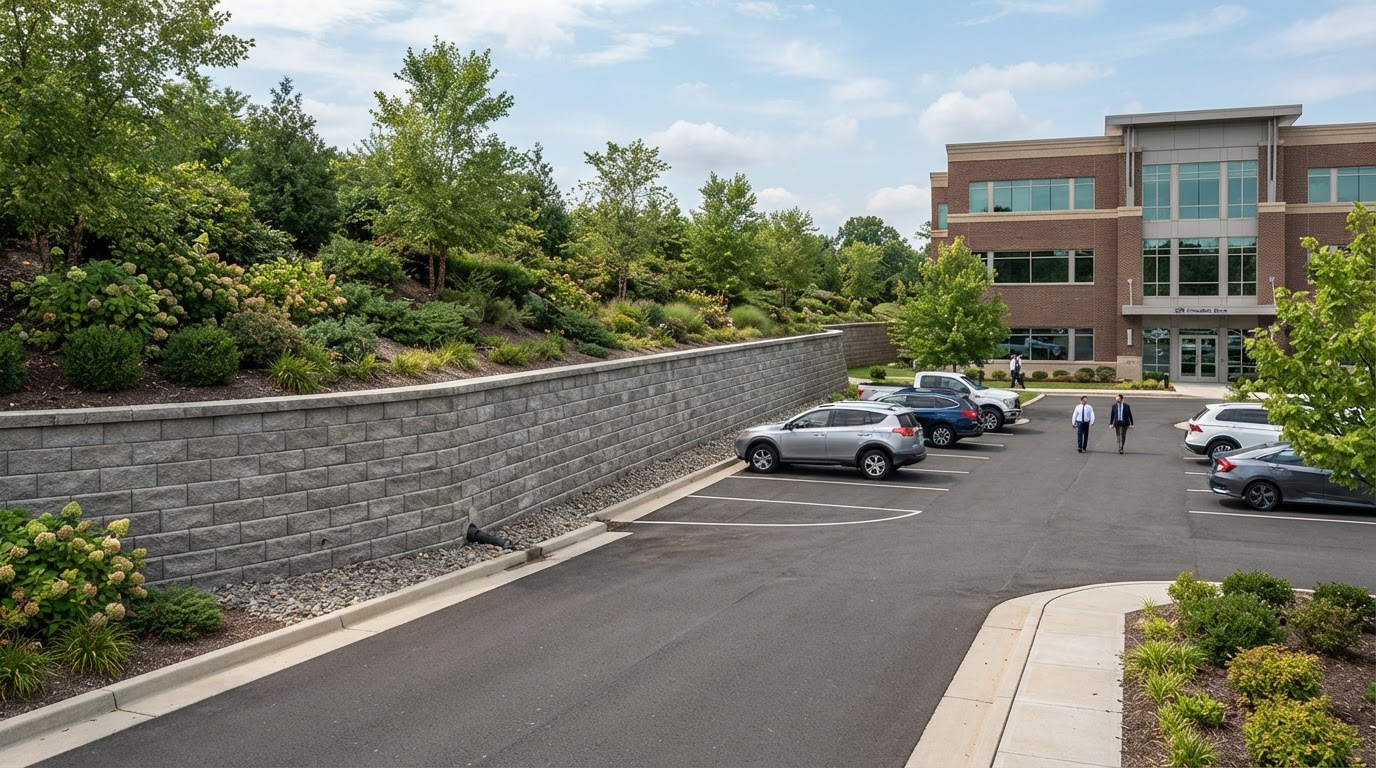
Commercial Retaining Wall Solutions
Commercial properties face their own challenges with slopes, drainage, erosion, and site access. Explore retaining wall solutions for business properties, managed landscapes, and other commercial sites.
Explore Commercial SolutionsA Simple Way to Get Started
Getting help with your property does not have to feel complicated. Start by telling us what you are seeing, what you want to improve, or what kind of outdoor project you have in mind.
Tell Us About Your Property
Share what is going on, whether you are dealing with erosion, drainage concerns, a failing retaining wall, or plans for a new outdoor project.
Discuss Your Project
Review your goals, ask questions, and get help identifying the next step based on your property and the kind of work you have in mind.
Request an Estimate
If you are ready to move forward, request an estimate and take the next step toward improving your outdoor space.
See What's Possible for Your Property
A steep slope, an aging retaining wall, or an awkward backyard doesn't have to define your outdoor space. Explore ideas for creating more attractive, functional areas with retaining walls and thoughtful landscaping.
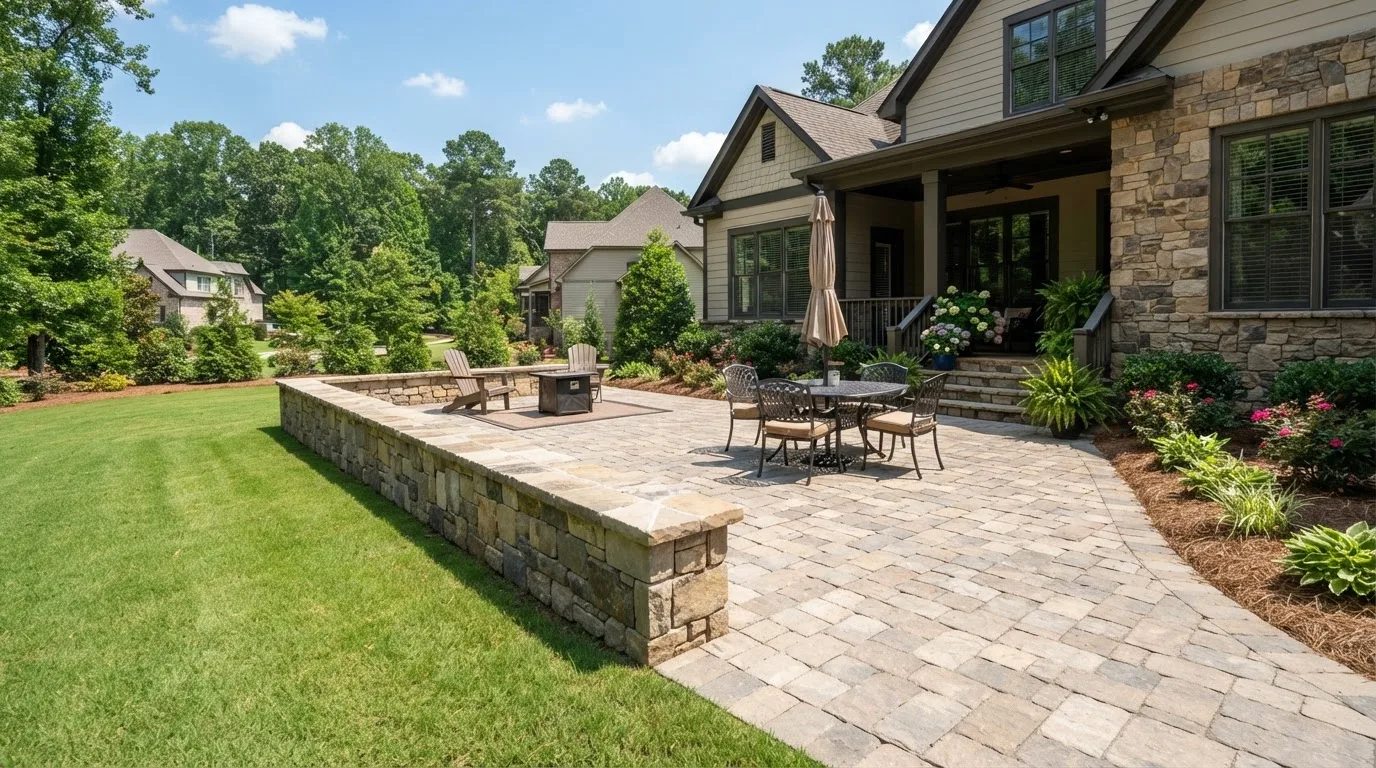
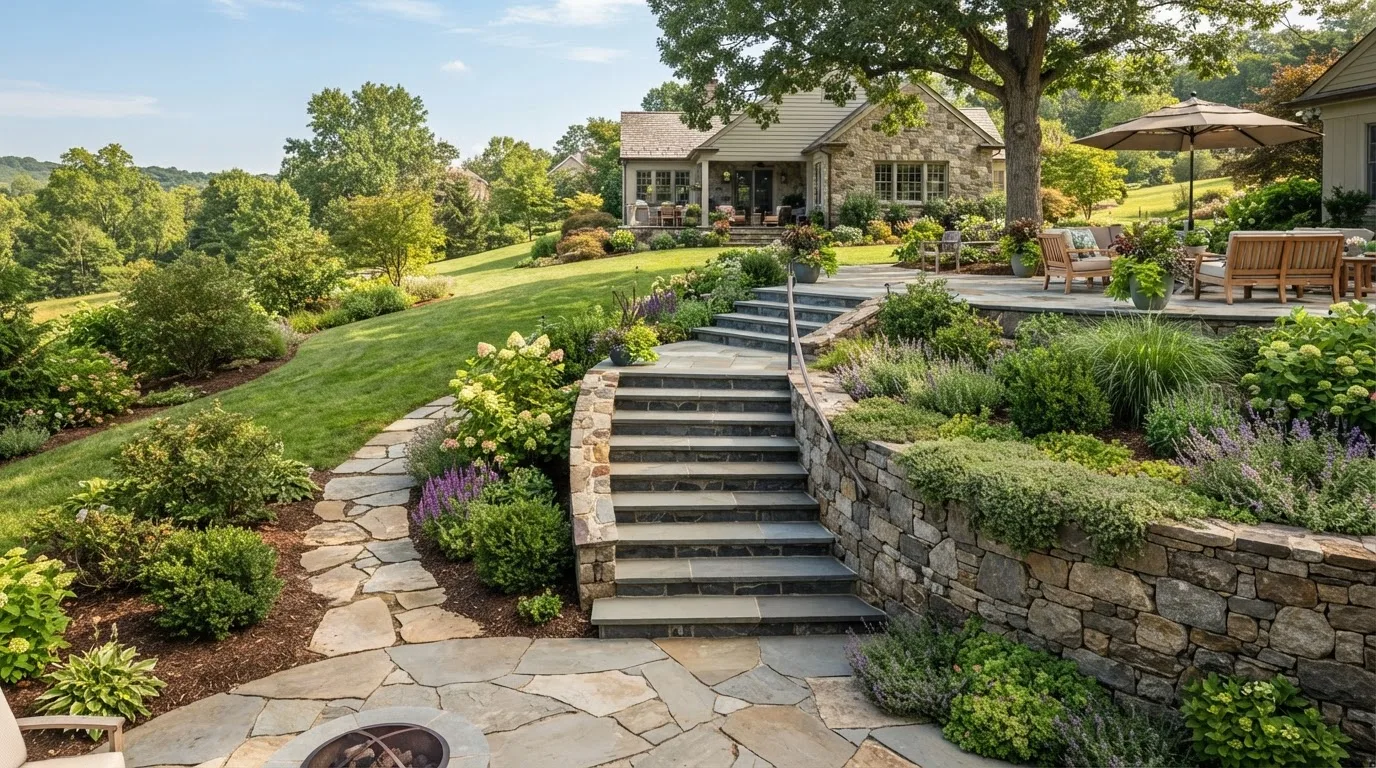
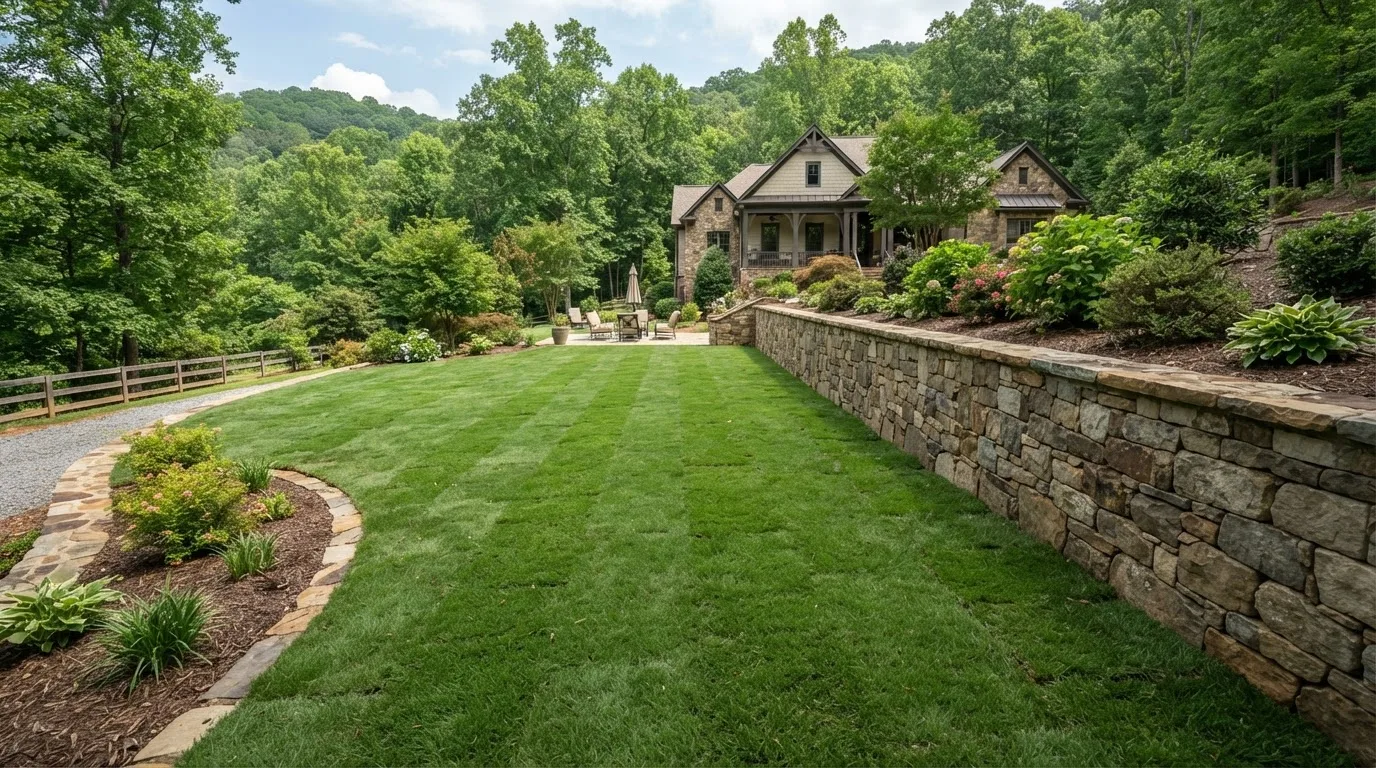
Images are illustrative examples of potential outdoor improvements.
Have a Similar Project in Mind?
Whether you're replacing an existing wall or planning something new, tell us what you'd like to accomplish.
Request a Free EstimateWhat Matters When Planning a Retaining Wall?
A retaining wall is more than a landscaping feature. The right approach depends on your property's conditions, the wall's purpose, and how it will perform over time.
A Solution That Fits Your Property
Wall height, slope, soil conditions, and the surrounding landscape all influence which retaining wall options may be appropriate.
Drainage That Gets Attention
Water buildup behind a retaining wall can create significant pressure. Drainage needs should be considered as part of the overall project.
Materials That Suit Your Goals
Concrete blocks, natural stone, and other wall systems offer different appearances and performance characteristics. The right choice depends on the application.
A Clear Understanding of the Work
Before moving forward, understand the proposed scope, materials, site preparation, drainage considerations, and what is included in the estimate.
Retaining Wall Services in Cartersville and North Georgia
Cartersville remains the center of our service area. From there, we help property owners across Bartow County and nearby North Georgia communities.
Retaining Wall Questions, Answered
Wondering what a retaining wall might cost, whether your existing wall can be repaired, or what to expect from a new project? Here are straightforward answers to questions homeowners commonly ask.
How much does a retaining wall cost in Cartersville, GA?
The cost depends on the wall's length, height, materials, soil conditions, drainage requirements, and accessibility. A short garden wall may be relatively straightforward, while a taller structural wall that requires engineering, excavation, or reinforcement can be a major investment. Removing an existing wall, hauling away debris, and restoring landscaping can also add to the price. For a meaningful estimate, start with the wall's approximate dimensions, its location, and what you want it to accomplish.
Can a leaning or cracked retaining wall be repaired, or does it need replacing?
It depends on why the wall is moving or cracking. Loose caps, minor surface deterioration, and certain localized problems may be repairable. Significant leaning, bulging, separation, or foundation movement can indicate a more serious issue that cosmetic repairs won't solve. The important question isn't just whether the wall can be patched, but whether the underlying cause can be corrected. Some walls require partial or complete reconstruction.
How do I know if my retaining wall is dangerous?
Watch for increasing lean, bulging, widening cracks, separated blocks, sinking ground above the wall, or soil washing out around it. Fresh movement after heavy rain is especially concerning. A wall showing these signs should be assessed promptly, particularly if it is near a home, driveway, walkway, or frequently used outdoor area. Keep people away from a visibly unstable wall until a qualified professional has evaluated it. Photos alone cannot establish whether a wall is safe.
Why is my retaining wall leaning, cracking, or bulging?
Possible causes include water pressure behind the wall, inadequate drainage, foundation movement, unsuitable backfill, poor compaction, or loads the wall wasn't designed to support. Tree roots and changes to the surrounding property can also contribute. The visible damage doesn't always reveal the underlying problem. Finding the cause matters because rebuilding a wall without addressing the original issue can lead to another failure.
Does every retaining wall need drainage?
Drainage is a critical design consideration for retaining walls. Water trapped behind a wall can increase pressure and contribute to movement or failure. Depending on the wall system and site conditions, drainage measures may include free-draining gravel, collection pipes, drainage outlets, and grading that directs surface runoff appropriately. The exact arrangement should be determined for the project. Simply drilling holes into an existing wall is not necessarily a safe or adequate repair.
Will a retaining wall stop water from flooding my yard?
Not necessarily. A retaining wall holds back soil; it isn't automatically a complete drainage solution. If water flows downhill into your yard, the project may also need grading, drainage collection, or measures that safely redirect runoff. The source of the water should be identified before deciding whether a wall will help. Sometimes drainage improvements or erosion-control landscaping may be more appropriate than building a retaining wall.
Can a retaining wall make my sloped backyard more usable?
Yes, when site conditions allow. Retaining walls and terracing can help create flatter areas for lawns, gardens, patios, and outdoor gathering spaces. How much usable space can be gained depends on the slope, property boundaries, nearby structures, drainage, and the height and placement of the proposed walls. A series of shorter terraces may be worth considering instead of one tall wall.
What is the best material for a retaining wall?
There isn't one material that's best for every property. Segmental concrete blocks are commonly used for residential walls and offer different sizes, colors, and finishes. Natural stone can provide a more traditional appearance. Poured concrete and other engineered systems may be appropriate for certain structural applications. The right choice depends on wall height, loads, site conditions, budget, appearance, and maintenance considerations.
How long should a retaining wall last?
A properly designed and constructed retaining wall can provide decades of service, but its useful life depends on materials, drainage, soil conditions, construction quality, and maintenance. Timber generally deteriorates faster than many concrete or stone systems. No material guarantees a long-lasting wall if water pressure, erosion, or foundation problems go unaddressed. Periodic inspection, especially after major storms, can help identify developing problems.
How long does it take to build or replace a retaining wall?
A small, accessible wall may take only a few working days to construct once the site is ready. Larger or more complicated projects can take substantially longer, especially when demolition, excavation, drainage, engineering, permits, or difficult access are involved. Weather and material availability can also affect scheduling. The project timeline should be discussed after the scope of work is established.
Do I need a permit or engineer for a retaining wall in Cartersville or Bartow County?
Requirements depend on the property's jurisdiction, wall height, and what the wall supports. In unincorporated Bartow County, the published code requires a permit when exposed wall height exceeds three feet, or exceeds two feet and supports a surcharge. The City of Cartersville has its own retaining wall application and plan requirements. Before construction, confirm the applicable requirements with the city or county building department. See the official resources linked below.
What should be included in a retaining wall estimate?
A useful estimate should clearly describe the proposed wall location, approximate dimensions, materials, site preparation, drainage approach, and the work included in the price. Ask whether demolition, disposal, excavation, backfill, reinforcement, engineering, permits, grading, and landscape restoration are included or priced separately. For a failing wall, ask how the proposed work addresses the suspected cause of failure. Comparing the scope is just as important as comparing the total price.
Can a retaining wall be built close to my house, driveway, or property line?
Possibly, but those locations require careful planning. A nearby building, driveway, fence, or slope can affect the loads on the wall and the available space for excavation, drainage, or reinforcement. Property boundaries, easements, and local requirements may also affect placement. Walls near structures or heavily used areas should be evaluated with particular care before construction begins.
What happens after I request an estimate?
Start by describing your property and the work you're considering. You can explain the problem, share approximate dimensions if you know them, and mention any concerns about drainage, erosion, or an existing wall. Your inquiry can then be reviewed and, where appropriate, shared with a contractor serving your area who may contact you to discuss the project and next steps. A site visit may be needed before an accurate construction estimate can be provided.
Still Have Questions About Your Property?
Every property is different. If you're dealing with a failing wall, erosion, drainage problems, or plans for a new retaining wall, tell us what you're considering.
Request a Free Estimate